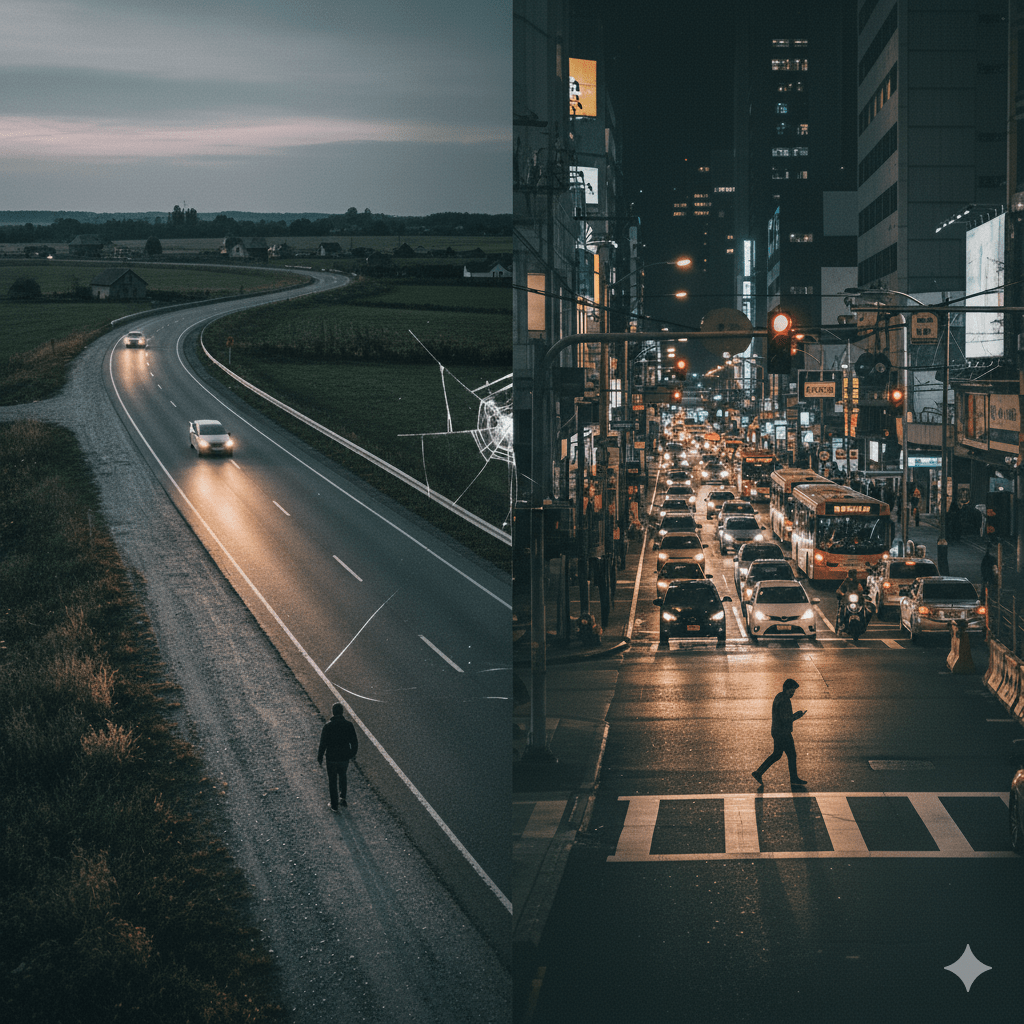
Pedestrians are among the most vulnerable road users, often facing high risk while walking along or crossing roads. Whether in rural areas, busy cities, or high-speed highways, the lack of safe pedestrian infrastructure and poor traffic discipline lead to thousands of preventable accidents every year. Understanding the vulnerability of pedestrians in rural and urban roads and highways is vital for planning safer, more inclusive transport networks.
Why Pedestrian Safety Matters
Walking is the most basic and sustainable mode of transport, yet it’s also the most unsafe when roads are not designed to protect pedestrians. Across India and many developing countries, pedestrians account for a major share of road facilities. Pedestrian vulnerability increases with speed, inadequate footpaths, poor lighting, distracted driving, and lack of enforcement of traffic rules.
In cities, pedestrians are exposed to congested traffic and encroached sidewalks. In rural areas, they often share the road with high-speed vehicles without any dedicated walking space. On highways, even a single unsafe crossing can turn fatal due to the sheer speed of vehicles.
Pedestrian Vulnerability on Rural Roads
Rural roads are often narrower, poorly lit, and lack basic walking infrastructure. Villagers, children, and farmers frequently walk along these roads or cross them to reach fields, schools, or bus stops.
Key issues on rural roads include:
- Absence of footpaths or shoulders: Most rural roads are designed primarily for vehicles, leaving pedestrians to walk on the edges or directly on the carriageway.
- High-speed vehicles: With fewer speed checks and wider stretches, vehicles move at unsafe speeds, increasing the severity of collisions.
- Poor visibility and lighting: Night-time walking becomes hazardous due to inadequate street lighting.
- Delayed medical assistance: Emergency services take longer to reach accident spots, increasing fatality rates.
As a result, pedestrians in rural areas are often at greater risk of death per crash compared to those in urban areas.
Pedestrian Risk on Urban Roads
Urban environments have dense traffic, mixed land use, and a constant flow of people. Though pedestrian facilities exist, they are often insufficient or encroached upon.
Common urban pedestrian safety problems include:
- Encroached or broken footpaths: Vendors and parked vehicles reduce available walking space.
- Unsafe crossings: Many intersections lack zebra crossings, signals, or pedestrian refuge islands.
- Disobedience of traffic rules: Motorists often ignore pedestrian right-of-way, and jaywalking is common due to poorly located crossings.
- Speeding and distracted driving: Mobile phone use and rushing through signals add to accident risk.
Despite more infrastructure, urban roads record a higher number of pedestrian accidents due to dense traffic and larger population exposure.
Vulnerability on Highways
Highways are designed for mobility and speed not pedestrian movement. However, in India and many developing countries, highways often pass through towns and settlements where people still need to cross the road for daily activities.
Highways become dangerous for pedestrians due to:
- High vehicle speeds: Impact forces at high speeds are almost always fatal for pedestrians.
- Lack of crossing facilities: Absence of underpasses, overbridges, or controlled crossings forces people to dash across multiple lanes.
- Poor signage and lighting: Pedestrians are less visible, especially at night.
- Inadequate barriers: Open medians and unprotected shoulders make entry easy but unsafe.
Highways near urban areas therefore require special design treatment to ensure safe pedestrian movement.
Comparative Overview: Rural vs Urban Pedestrian Vulnerability
|
Major Causes of Pedestrian Accidents
- Overspeeding and reckless driving on both rural and urban roads.
- Lack of pedestrian infrastructure such as footpaths, zebra crossings, and signals.
- Poor visibility due to inadequate lighting or vehicle headlight glare.
- Driver distraction caused by mobile phones or fatigue.
- Improper road design, especially where highways intersect settlements.
- Non-compliance with traffic rules by both drivers and pedestrians.
Strategies to Improve Pedestrian Safety
- Infrastructure Design
- Construct continuous sidewalks on both rural and urban roads.
- Provide pedestrian underpasses, overbridges, and refuge islands at key crossings.
- Improve lighting in accident-prone zones.
- Traffic Calming Measures
- Introduce rumble strips, raised pedestrian crossings, and speed limit enforcement near schools and villages.
- Redesign highways passing through populated zones with service roads and pedestrian zones.
- Awareness and Education
- Conduct community campaigns about safe crossing and visibility at night.
- Promote school-based road safety education programs.
- Technology and Enforcement
- Use CCTV and smart traffic signals for better compliance.
- Enforce penalties for speeding, drunk driving, and illegal parking on footpaths.
- Policy and Planning Integration
- Include pedestrian safety in all urban and rural road projects.
- Conduct road safety audits focusing on pedestrian movement before project approval.
Role of Urban Planners and Authorities
Planners and engineers must prioritize pedestrians as the most vulnerable group. Future road designs should follow a “Complete Streets” approach ensuring equal space and safety for all road users. The inclusion of pedestrian-friendly designs, landscaping, and safe crossings should be mandatory in both new road projects and retrofits.
Pedestrian vulnerability on rural and urban roads, as well as highways, remains a critical issue affecting public safety and sustainable mobility. While rural roads suffer from lack of infrastructure, urban areas face congestion and unsafe behavior. Highways present the deadliest combination of speed and human movement. A coordinated effort involving infrastructure development, strict enforcement, and behavioral change is essential to protect lives and make walking safe again.