Over the past few years, the construction industry has been steadily moving toward more digital and data-driven methods. One of the most important developments in this shift is BIM modelling, which has changed the way projects are designed, coordinated, and executed.
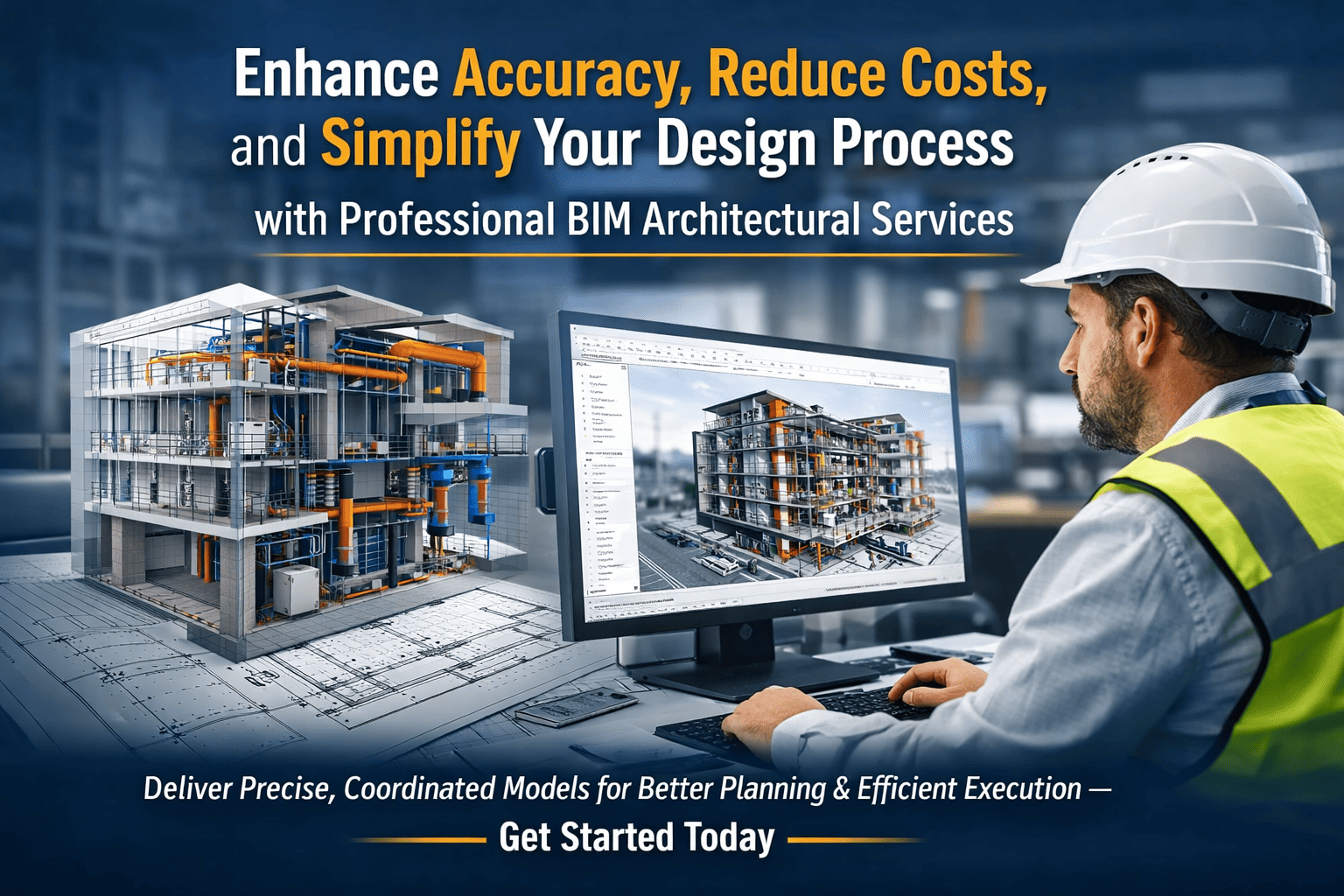
Instead of relying only on traditional drawings, BIM allows teams to work with a detailed 3D model that brings together design, technical data, and project information in one place. This makes it easier to understand the project as a whole and reduces the chances of errors later on.
What is BIM Modelling?
BIM (Building Information Modeling) is essentially the process of creating a digital representation of a building or infrastructure project. But it’s not just about a 3D model—it also includes information about materials, dimensions, systems, and performance.
In practice, this means that every element in the model—whether it’s a wall, beam, or pipe—carries useful data. Tools like Autodesk Revit are widely used to develop and manage these models, allowing teams to work more efficiently and stay coordinated.
How BIM Modelling Works
1. Gathering Project Information
The process usually starts with collecting available inputs such as design drawings, site data, or even point cloud data from laser scans. The quality of this input has a direct impact on the final model.
2. Creating the 3D Model
Using BIM software like Autodesk Revit, the design is developed into a 3D model. This includes architectural layouts, structural systems, and MEP services, all built within the same environment.
3. Coordination Between Disciplines
Once different models are prepared, they are brought together to check how they interact. Tools such as Navisworks Manage help identify clashes—for example, where a pipe might interfere with a beam—so issues can be resolved before construction begins.
4. Generating Drawings and Data
The model is then used to produce drawings, schedules, and quantity take-offs. Since everything is connected, any change in the model automatically updates the related outputs.
5. Level of Detail (LOD)
BIM models are developed gradually, depending on the stage of the project:
- LOD 100 – Early concept
- LOD 200 – Basic geometry
- LOD 300 – Detailed design
- LOD 400 – Construction-level detail
- LOD 500 – Final as-built condition
Types of BIM Modelling
In most projects, BIM modelling is divided into a few key areas:
- Architectural BIM – Focuses on layout, space planning, and finishes
- Structural BIM – Covers load-bearing elements like beams and columns
- MEP BIM – Includes mechanical, electrical, and plumbing systems
- As-built BIM – Reflects the final condition after construction
Each of these plays a specific role, but they all come together in a coordinated model.
Why BIM Modelling is Important
One of the biggest advantages of BIM is clarity. When everyone involved in a project is working from the same model, there’s less confusion and fewer misunderstandings.
It also helps catch problems early. Instead of discovering issues on-site, teams can identify and fix them during the design stage. This not only saves time but also reduces unnecessary costs.
Another important aspect is efficiency. Since drawings and quantities are generated directly from the model, the overall workflow becomes faster and more reliable.
Where BIM Modelling is Used
BIM modelling is now used across a wide range of projects:
- Residential and commercial buildings
- Infrastructure such as roads and bridges
- Industrial facilities and plants
- Ongoing facility management and maintenance
Its flexibility makes it suitable for both small and large-scale developments.
BIM modelling has become an essential part of modern construction, not because it is a trend, but because it solves real problems. It brings better coordination, improves accuracy, and helps teams make more informed decisions throughout the project lifecycle. As the industry continues to evolve, the use of BIM is only expected to grow, making it a key tool for anyone involved in design, engineering, or construction.
BIM Companies In Bangalore | BIM Companies In Chennai | BIM Companies In Hyderabad | BIM Companies In Pune | BIM Company | BIM Companies In India | Top BIM Companies In India | BIM Companies In Dubai | BIM Companies In Nagpur | BIM Companies In UAE | BIM Company In Kolkata | BIM Company In Nagpur | BIM Companies In Mumbai | Engineering Companies In Thane | Mechanical Design Companies In Chennai | BIM Companies In Delhi | Mep Companies In Bangalore | Best BIM Companies In India | BIM Companies In Gurgaon
FAQ’s
1. How do I choose the right BIM modeling companies for my project?
When selecting from different bim modeling companies or bim modelling companies, it’s important to look at their experience, types of projects handled, software expertise, and ability to deliver at the required Level of Development (LOD). Reviewing past work and coordination capabilities also helps in making the right choice.
2. What services are included in BIM modeling services?
Bim modeling services typically include architectural, structural, and MEP modeling, along with clash detection, coordination, and documentation. Many providers also offer specialized solutions such as architectural bim modeling services and mep bim modeling services depending on project needs.
3. What are 5D BIM modeling services and why are they important?
5d bim modeling services go beyond 3D modeling by adding cost estimation to the model. This helps in accurate budgeting, cost control, and better financial planning throughout the project lifecycle.
4. Can CAD drawings be converted into BIM models?
Yes, cad to bim modeling services are commonly used to convert 2D CAD drawings into intelligent 3D BIM models. This improves visualization, coordination, and overall project efficiency.
5. What is point cloud to BIM modeling and when is it used?
Point cloud to bim modeling services are used when data is captured through laser scanning. The point cloud is converted into a BIM model, which is especially useful for renovation, retrofit, or existing structure documentation.