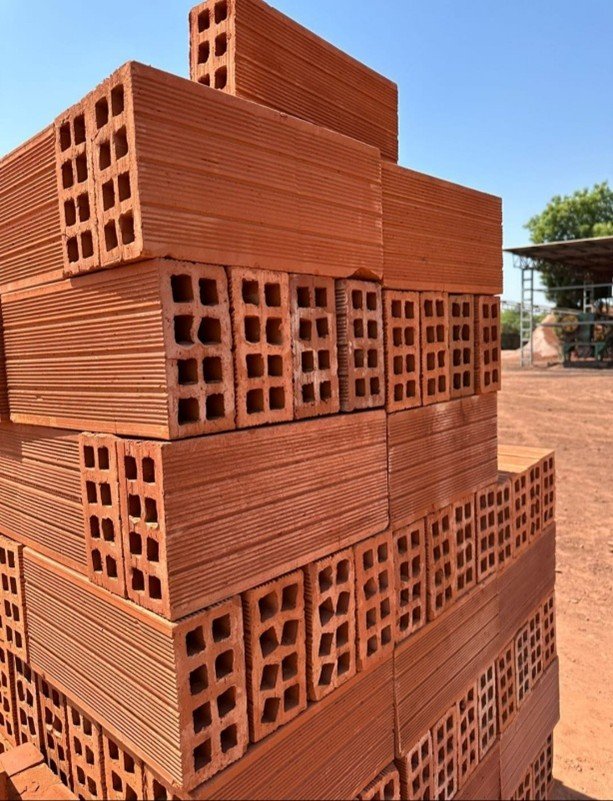
In the construction industry, material selection plays a critical role in determining project efficiency, cost control, and long-term performance. Among the preferred materials in contemporary building practices, hollow bricks stand out for their lightweight composition, excellent thermal and acoustic insulation, and overall sustainability advantages.
For contractors, architects, structural designers, and other construction professionals, selecting the right materials plays a crucial role in improving efficiency, controlling costs, and ensuring long-term performance. We can customize the shape and openings of the Hollow bricks, with their lightweight nature, insulation properties, and sustainability benefits, offer significant advantages across various stages of a project.
Professionals who benefit include:
- Contractors, through faster construction and reduced labour costs
- Architects, by enabling flexible design and improved thermal comfort
- Structural designers, due to reduced dead load on the structure
- Landscape designers, by supporting lightweight built elements such as garden walls, seating edges, and service structures without overloading soil or subgrades
- Developers and builders, through overall cost optimization and quicker project delivery
- Surveyors and project managers, by improving planning accuracy and execution efficiency
Understanding the effective utilization of hollow bricks helps all stakeholders make informed decisions, resulting in more economical, durable, and sustainable construction outcomes.
What Are Hollow Bricks in Construction?
Hollow bricks are masonry units with internal cavities designed to reduce weight while maintaining structural strength. They are commonly used in residential construction, commercial buildings, and infrastructure projects.
Importance of Hollow Bricks in Construction Projects
- Reduced Structural Load
Hollow bricks are significantly lighter than traditional solid bricks, which:
- Reduces dead load on beams, columns, and foundations
- Enables economical structural design
- Improves safety, especially in multi-storey buildings
- Thermal & Acoustic Insulation
- The air cavities inside hollow bricks act as natural insulators.
- Maintain cooler indoor temperatures (important for Pune climate)
- Reduce dependency on air conditioning
- Provide sound insulation, improving indoor comfort.
- Faster Construction Execution
Due to their lightweight nature and uniform size, hollow bricks enable:
- Faster masonry work
- Reduced labour cost
- Improved project timelines
Role of Hollow Bricks in Design and Planning
For surveying and engineering teams, hollow bricks influence multiple aspects of planning:
- Accurate Quantity Estimation
Using hollow bricks affects:
- Material quantity take-offs
- Load calculations
- Cost estimation
- Better Project Feasibility
Surveyors and planners can optimize:
- Structural design
- Resource allocation
- Budget forecasting
Applications in Modern Architecture
Hollow bricks are widely used in:
- Partition walls for efficient space utilization
- External walls with insulation benefits
- Load-reducing structures in high-rise buildings
- Green building designs
Their versatility makes them suitable for both functional and aesthetic architectural solutions.
Sustainability and Green Building Benefits
Hollow bricks support environmentally responsible construction:
- Reduced raw material usage
- Lower carbon footprint
- Compatibility with green building practices
Key Considerations for Construction Professionals
To maximize the benefits of hollow bricks:
- Ensure proper mortar mix and bonding
- Use correct brick grade based on load requirements
- Maintain quality during installation and curing
- Integrate with structural design for safety
Why Hollow Bricks Are Ideal for Modern Construction Businesses
For construction companies, project management consultants, and surveying firms, hollow bricks offer:
- Cost-effective construction solutions
- Customizable
- Faster project delivery
- Improved building performance
- Better sustainability compliance
The utilization of hollow bricks in architectural design is a smart choice for modern construction projects. Their advantages go beyond basic masonry they contribute to efficient project execution, cost savings, and sustainable development. For professionals in construction and surveying, adopting hollow bricks can lead to better planning, improved structural performance, and enhanced client satisfaction.