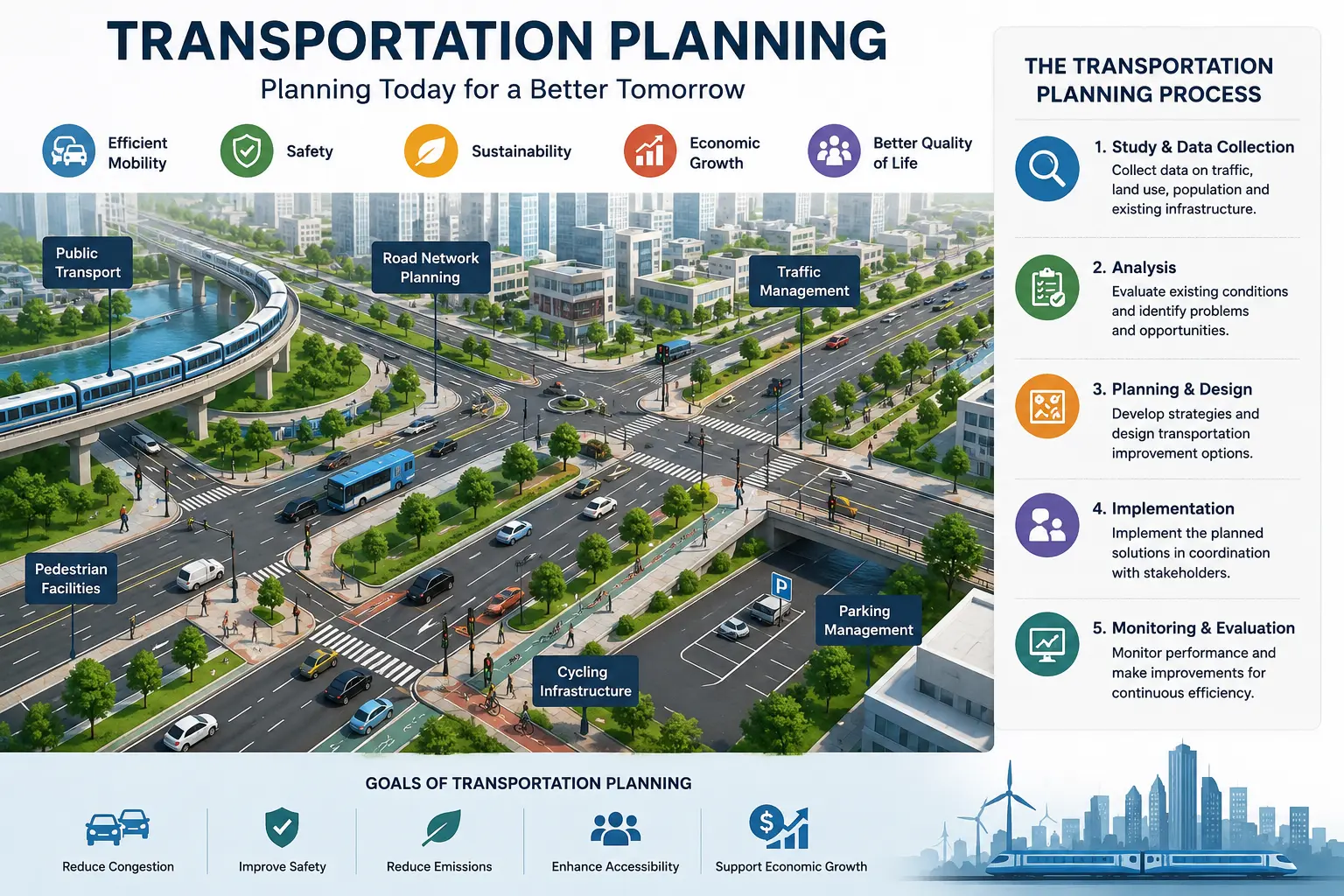
Transportation planning is an essential part of modern infrastructure and urban development. As cities continue to grow and populations increase, the need for efficient transportation systems becomes more important. Roads, public transport, pedestrian facilities, parking areas, and traffic circulation systems all require careful planning to ensure smooth movement of people and goods.
Without proper transportation planning, cities can face major challenges such as traffic congestion, road safety issues, long travel times, fuel wastage, and environmental pollution. A well-planned transportation system helps improve connectivity, supports economic activities, and enhances the overall quality of life.
What is Transportation Planning?
Transportation planning is the process of studying and organizing transportation systems to improve mobility and accessibility. It involves analyzing how people and vehicles move within an area and developing solutions that make transportation safer, faster, and more efficient.
The planning process considers various factors including:
- Population growth
- Road network capacity
- Traffic patterns
- Public transportation needs
- Land use development
- Environmental impact
- Future infrastructure requirements
The goal is to create transportation systems that can support both current and future demands.
Why Transportation Planning is Important
Transportation systems directly affect daily life. Whether people are commuting to work, transporting goods, traveling between cities, or accessing public services, efficient transportation plays a critical role in economic and social development.
Reduces Traffic Congestion: One of the main objectives of transportation planning is to reduce traffic congestion. Properly designed road networks and traffic management systems help improve vehicle movement and reduce delays.
Improves Safety: Transportation planning helps create safer roads for drivers, pedestrians, and cyclists. Proper road layouts, traffic control systems, pedestrian crossings, and signage contribute to reducing accidents and improving safety.
Supports Economic Development: Efficient transportation networks improve connectivity between residential, commercial, and industrial areas. Better transportation systems help businesses operate more efficiently and support economic growth.
Enhances Accessibility: Good transportation planning improves access to schools, hospitals, workplaces, shopping centers, and public facilities. It also supports better public transportation systems for communities.
Promotes Sustainable Development: Modern transportation planning focuses on sustainability by encouraging public transportation, pedestrian-friendly infrastructure, cycling facilities, and environmentally responsible mobility solutions.
Key Elements of Transportation Planning
Transportation planning involves several important components that work together to create efficient mobility systems.
Road Network Planning: Road network planning focuses on designing roads and intersections that support smooth traffic flow. Proper planning helps reduce bottlenecks and improves connectivity between different areas.
Traffic Management: Traffic management includes the use of signals, lane systems, signage, and traffic control measures to regulate vehicle movement and improve road efficiency.
Public Transportation Planning: Public transportation systems such as buses, metro rail, and local transit services are important for reducing private vehicle usage and improving urban mobility.
Parking Planning: Parking management is another important aspect of transportation planning. Organized parking systems help reduce roadside congestion and improve accessibility.
Pedestrian and Cycling Infrastructure: Modern transportation systems increasingly focus on walkability and cycling infrastructure. Safe footpaths, pedestrian crossings, and bicycle lanes encourage healthier and more sustainable transportation options.
Role of Technology in Transportation Planning
Technology has significantly improved transportation planning in recent years. Advanced tools and digital systems help planners analyze traffic patterns, monitor transportation systems, and develop better infrastructure solutions.
Some commonly used technologies include:
- Geographic Information Systems (GIS)
- Traffic simulation software
- GPS and digital mapping
- Smart traffic management systems
- Data analytics and monitoring tools
These technologies help improve decision-making and create more efficient transportation networks.
Transportation Planning in Urban Areas
Urban areas face increasing transportation challenges due to population growth and rising vehicle numbers. Transportation planning helps cities manage these challenges by improving infrastructure and promoting organized mobility systems.
Urban transportation planning often focuses on:
- Reducing travel time
- Improving public transportation
- Managing parking demand
- Enhancing pedestrian safety
- Supporting sustainable mobility
Well-planned transportation systems contribute to smarter and more livable cities.
Challenges in Transportation Planning
Transportation planning involves several challenges, especially in rapidly growing regions. Some common challenges include:
- Increasing traffic volumes
- Limited infrastructure space
- Environmental concerns
- High infrastructure costs
- Public transportation integration
- Changing mobility patterns
Addressing these challenges requires long-term planning, innovative solutions, and efficient infrastructure management.
Future of Transportation Planning
The future of transportation planning is evolving with advancements in technology and changing transportation needs. Smart mobility solutions, electric vehicles, intelligent transportation systems, and sustainable urban development are becoming important parts of future transportation strategies.
Cities around the world are focusing on transportation systems that are:
- Safer
- More efficient
- Environmentally friendly
- Digitally connected
- Sustainable
Future transportation planning will continue to play a major role in improving mobility and supporting urban development.
Transportation planning is a vital part of modern infrastructure development and urban growth. It helps improve mobility, reduce congestion, enhance safety, and support economic progress. By developing efficient transportation systems, cities and communities can create better living environments and ensure long-term sustainability.
As transportation demands continue to increase, effective planning and smart infrastructure solutions will remain essential for building connected, accessible, and future-ready communities.
Metropolitan planning organizations | Transportation Planning Firms | Transportation Planning Company | Transportation Planning firm | Transportation Planning Companies | Transportation planning consulting firms | Transportation planning consulting | Transport planning society