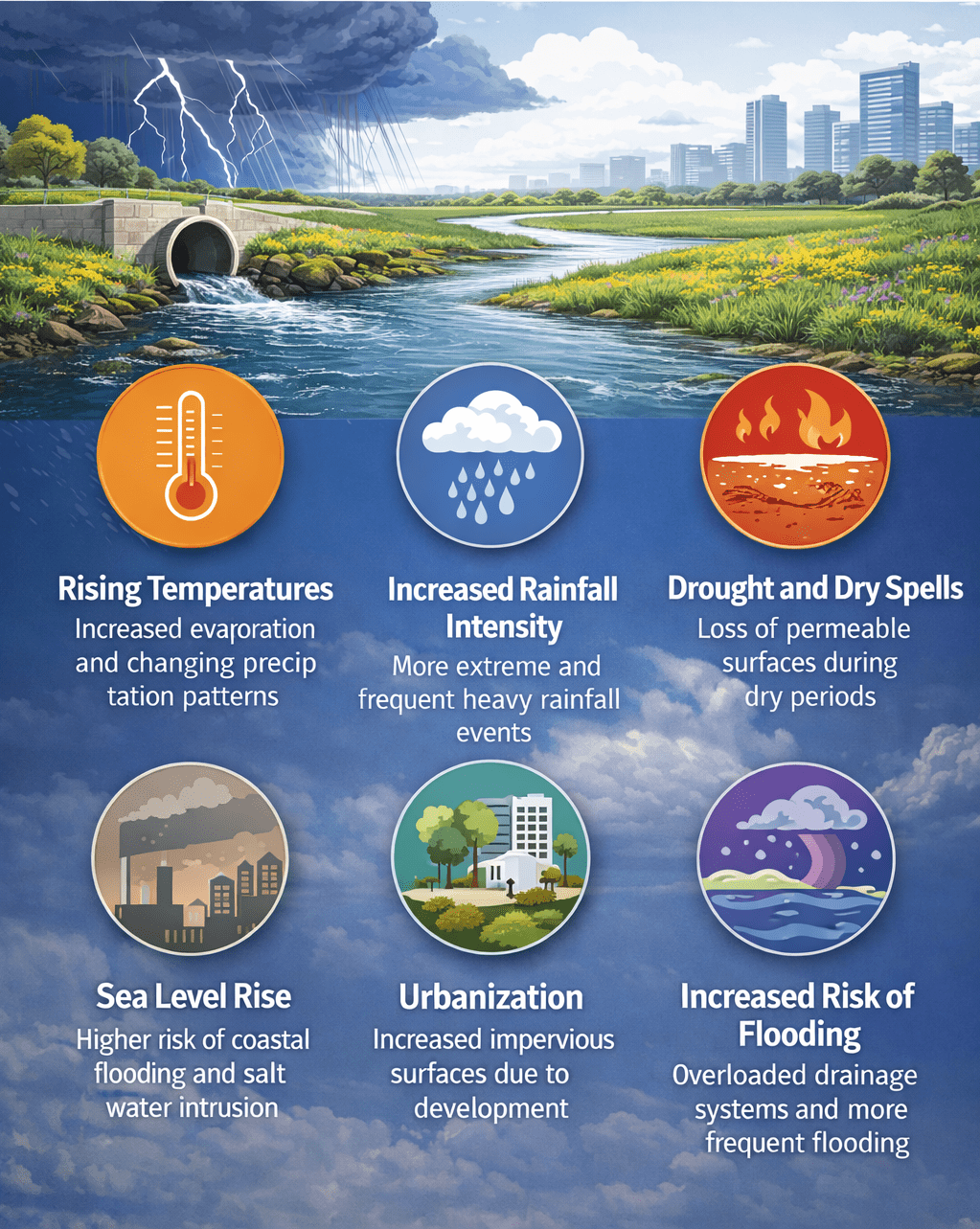
Climate change is increasingly influencing the way infrastructure projects are planned and designed, especially storm water drainage systems. Rising global temperatures, unpredictable rainfall patterns, and frequent extreme weather events have exposed the limitations of conventional drainage networks. Storm water drainage projects that were traditionally designed using historical climate data are no longer sufficient to manage present and future runoff conditions. As a result, incorporating climate change factors into storm water drainage project design has become a critical requirement for sustainable urban development.
Impact of Changing Rainfall Patterns
One of the most significant effects of climate change is the variation in rainfall intensity and frequency. Many regions are experiencing sudden, high-intensity rainfall over short durations, leading to excessive surface runoff. Such rainfall events generate peak flows that exceed the carrying capacity of existing storm water drains. Modern drainage design must therefore consider increased rainfall intensity, longer wet seasons, and unpredictable precipitation patterns to reduce the risk of urban flooding.
Increased Surface Runoff Due to Urbanization
Urban expansion has resulted in a higher percentage of impervious surfaces such as roads, pavements, and buildings. When combined with climate-induced heavy rainfall, this leads to increased surface runoff and reduced natural infiltration. Storm water drainage projects must be designed to manage higher runoff volumes while ensuring efficient flow and safe discharge. Ignoring these factors can result in waterlogging, traffic disruption, property damage, and public health concerns.
Extreme Weather Events and Drainage Capacity
Climate change has increased the frequency of extreme weather events, including intense storms and prolonged rainfall. These events place additional stress on storm water drainage infrastructure. Designing drainage systems with adequate safety margins, higher design return periods, and overflow mechanisms helps improve system performance during extreme conditions. Resilient drainage design reduces infrastructure failure and minimizes flood-related losses.
Influence of Climate Change on Drainage Infrastructure Performance
Temperature variations and changing climatic conditions can affect the performance and durability of drainage infrastructure. Extended dry periods followed by heavy rainfall can alter soil characteristics, increasing runoff rates. Climate-responsive design considers long-term infrastructure performance by selecting suitable materials, accounting for thermal expansion, and planning for regular maintenance under changing environmental conditions.
Importance of Sustainable Storm Water Management
Sustainable storm water management practices play a vital role in addressing climate change impacts. Approaches such as on-site water retention, infiltration systems, and controlled discharge help reduce pressure on conventional drainage networks. These solutions support groundwater recharge, improve water quality, and enhance overall drainage efficiency. Integrating sustainability into storm water drainage project design ensures long-term environmental and economic benefits.
Role of Advanced Planning and Design Tools
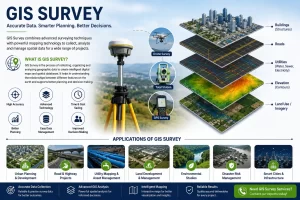
Advanced planning tools and digital technologies are increasingly used in storm water drainage design to address climate uncertainties. Hydrological modeling, risk assessment, and scenario analysis help engineers evaluate system performance under varying rainfall conditions. Data-driven design improves decision-making and enables optimized drainage layouts that are adaptable to future climate changes.
Need for Flexible and Adaptive Design Approaches
Given the uncertainty associated with climate change, storm water drainage systems must be designed with flexibility in mind. Adaptive design allows future system upgrades without major reconstruction. Provisions for capacity enhancement, modular components, and phased implementation enable drainage infrastructure to respond effectively to evolving climate conditions and urban growth.
Policy Alignment and Long-Term Resilience
Many infrastructure planning guidelines now emphasize climate-resilient storm water management. Aligning drainage project design with updated standards and sustainability goals ensures long-term system reliability. Climate-responsive storm water drainage projects contribute to resilient cities by minimizing flood risks, protecting assets, and improving overall urban liveability.
Climate change is a key factor shaping modern storm water drainage project design. Increasing rainfall intensity, extreme weather events, and urban development require a shift toward resilient, sustainable, and adaptable drainage solutions. By integrating climate change considerations into storm water drainage planning and design, infrastructure projects can achieve improved performance, reduced flood risks, and long-term sustainability. Forward-looking drainage design is essential for building resilient communities and managing future climate challenges effectively.