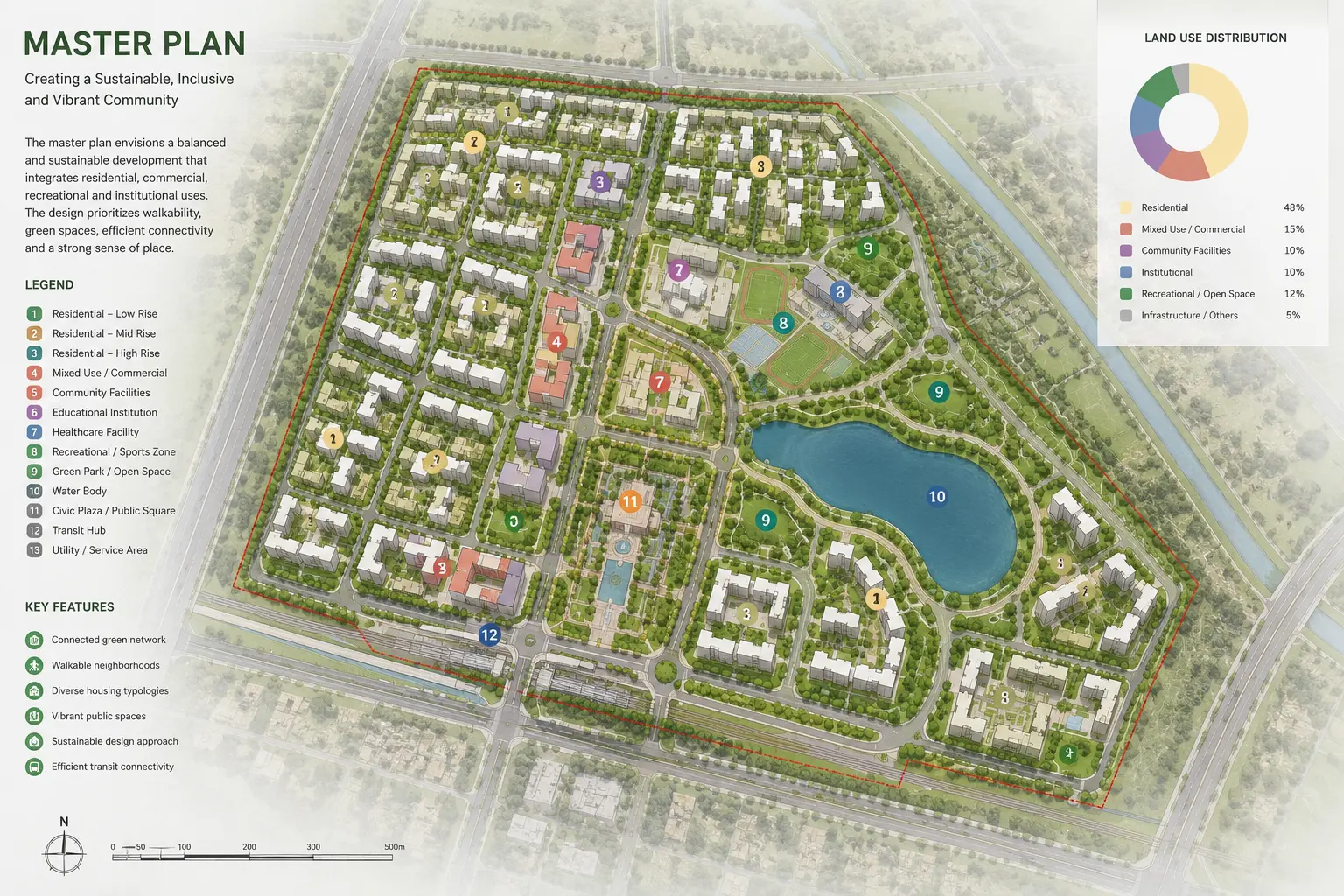
Master planning is a strategic tool for shaping the future of projects and communities. It provides a roadmap for development, ensuring that growth is sustainable and well-organized.
In urban development, master planning guides land use, infrastructure, and public spaces. It aligns short-term actions with long-term goals, crucial for strategic planning.
Effective master planning involves collaboration among stakeholders, including government, community, and private sectors. It addresses transportation, housing, environment, and economic development.
What is Master Planning?
Master planning is a comprehensive process for envisioning and preparing a project or area’s long-term development. It acts as a strategic framework, detailing visions, goals, and actions to achieve desired outcomes over time.
The process is vital in various fields, including urban development and project management. By offering a clear blueprint for growth and change, it helps in making informed decisions.
Master planning typically involves multiple steps, each crucial for developing a cohesive plan. These steps include data collection, stakeholder engagement, and visioning.
Key elements in a master plan often cover:
- Land use and zoning
- Infrastructure and mobility
- Sustainability and environmental considerations
- Community needs and engagement
Ultimately, master planning brings together diverse perspectives, fostering a collaborative approach to future growth and transformation.
The Importance of Master Planning in Project Management and Urban Development
Master planning is essential in both project management and urban development. It aligns immediate actions with broader long-term objectives, creating cohesion between varied project phases. This alignment is crucial for maintaining direction and efficiency.
In urban development, master planning organizes land use, infrastructure, and public spaces. It balances growth with sustainability, ensuring that developments meet current needs while preserving future potential. Effective planning reduces risks and enhances livability in urban areas.
For project managers, having a master plan provides a roadmap that simplifies complex decision-making processes. It prioritizes tasks and allocates resources appropriately, aiding in the management of time and budget constraints.
Master planning emphasizes:
- Strategic vision
- Sustainability
- Stakeholder collaboration
- Risk mitigation
Incorporating these factors ensures that both urban and project development efforts are successful and sustainable over time.
Key Components of a Master Plan
A master plan acts as a guiding document that includes various key components. These elements work together to ensure successful outcomes. Each component is crucial and contributes to the overall vision.
At the foundation is a clear vision and a set of goals. These establish the direction for future developments. Without these, efforts can become disorganized or misaligned.
The plan must also incorporate a comprehensive analysis of existing conditions. Understanding current assets, challenges, and opportunities sets the stage for effective planning. This analysis helps in tailoring strategies to actual needs.
Additionally, stakeholder input is vital. Involving government, community, and private sectors fosters buy-in and ensures diverse perspectives are considered. Strong community engagement strengthens the planning process.
Key components typically include:
- Vision and goals
- Existing condition analysis
- Stakeholder engagement
- Implementation strategies
These components, when effectively combined, provide a robust framework for future development.
The Master Planning Process: Step-by-Step
Creating a master plan involves a series of methodical steps. Each step is designed to build on the previous one. This ensures a coherent and effective planning process.
The process begins with an initial assessment. This includes collecting data on existing conditions and resources. This step is fundamental to understand the current state.
Stakeholder engagement follows next. In this stage, community members and key stakeholders collaborate. Their input shapes the planning process significantly.
Visioning and goal setting come afterward. Here, aspirations for the future are outlined. Setting clear goals guides every subsequent step.
Drafting and visualization then take center stage. Draft plans and visuals help in conceptualizing ideas. These drafts are crucial for evaluating feasibility.
After draft development, review and approval occur. Authorities and stakeholders review the draft plan. Subsequent approval leads to implementation.
Finally, the process must include monitoring and evaluation. Plans are not static; they evolve. Regular updates ensure plans remain relevant and effective.
- Data collection
- Stakeholder engagement
- Visioning
- Drafting
- Approval
- Monitoring
Step 1: Initial Assessment and Data Collection
The master planning process starts with a thorough assessment. This involves gathering data on existing conditions. Planners examine infrastructure, resources, and demographics.
Identifying current opportunities and challenges is essential. This baseline data informs future planning decisions. Without it, strategies lack context and depth.
Step 2: Stakeholder Engagement and Community Involvement
Involving stakeholders is a critical step. Their insights are invaluable to the planning process. Community input ensures plans reflect local needs.
Engagement methods can include:
- Public workshops
- Surveys
- Town hall meetings
This involvement strengthens plan acceptance and support.
Step 3: Visioning and Goal Setting
Visioning and goal setting establish a strategic direction. Participants outline long-term aspirations for the project. Setting clear, achievable goals is critical here.
This step aligns stakeholders with a shared vision. Well-defined goals provide clarity for subsequent actions. They help in directing resources effectively.
Step 4: Drafting and Visualization
Drafting involves creating initial concepts and layouts. Visuals, such as diagrams and maps, illustrate the plan. These tools help in communicating ideas.
Drafts allow for exploring different scenarios. Through visualization, stakeholders can evaluate feasibility. This iterative process refines the plan before finalization.
Step 5: Review, Approval, and Implementation
The draft plan undergoes reviews by officials and stakeholders. Feedback is integrated to improve the proposal. Approval leads to the execution phase.
Implementation follows after gaining the necessary approvals. It involves setting actions in motion. Clearly outlined steps ensure smooth progress.
Step 6: Monitoring, Evaluation, and Updating
Master plans require ongoing monitoring and evaluation. This step ensures objectives are being met. Regular checks allow for timely adjustments.
Plans must adapt to changing conditions and information. Periodic updates keep plans relevant and effective. This flexibility is key to long-term success.
Master Planning in Strategic Planning: Aligning Short-Term Actions with Long-Term Goals
Master planning plays a vital role in strategic planning. It bridges the gap between short-term actions and long-term goals. This alignment is crucial for achieving sustained success.
Strategic plans provide a broad vision, whereas master plans detail specific actions. Together, they ensure that everyday activities contribute to overarching goals. This synergy prevents misalignment and maximizes resources.
Master planning tools help prioritize tasks and investments. This focus on priorities ensures efficiency. It translates strategic intentions into tangible outcomes.
- Prioritize tasks
- Streamline resources
- Align actions with goals
This harmony between planning levels strengthens overall impact, driving better results.
Tools and Technologies in Modern Master Planning
Modern master planning leverages advanced tools and technologies. These innovations enhance precision and efficiency throughout the planning process. Incorporating technology allows planners to create more detailed and adaptable plans.
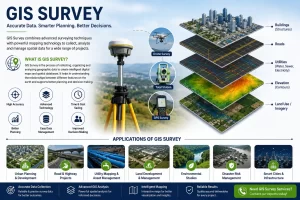
Key tools include Geographic Information Systems (GIS), data analytics, and 3D modeling. These helps visualize and analyze spatial data effectively. They facilitate better decision-making by providing comprehensive insights.
- Geographic Information Systems (GIS)
- Data analytics
- 3D modeling
By using these technologies, planners can anticipate and address challenges more proactively. This anticipatory approach leads to more resilient and sustainable developments.
Challenges and Best Practices in Master Planning
Master planning comes with several challenges. Balancing diverse stakeholder interests is often difficult. Additionally, changing conditions require plans to be adaptable.
Best practices help overcome these challenges. Successful planning involves clear communication and sustained collaboration. Engaging stakeholders ensures more comprehensive and inclusive plans.
- Clear communication
- Stakeholder engagement
- Flexible adaptation
Implementing these best practices leads to more effective master plans. They enhance the overall planning process and make it more responsive. With thoughtful application, challenges become opportunities for innovation.
Case Studies: Successful Master Planning Examples
Successful master planning provides valuable insights. Cities worldwide showcase compelling examples that blend innovation with tradition. They offer lessons on urban development and strategic growth.
These projects reflect the power of comprehensive master planning. They demonstrate how thoughtful strategies can rejuvenate spaces and improve quality of life. Each case offers unique strategies suitable for different contexts and needs.
The Future of Master Planning
Master planning is evolving alongside technological advancements and changing societal needs. It remains crucial for shaping livable, sustainable, and inclusive environments. As we look ahead, embracing new tools and inclusive processes will be vital.
Future plans must address climate change, urbanization, and global connectivity. By focusing on these areas, master planning can continue to guide dynamic and resilient development. This ensures communities remain vibrant and adaptable for generations to come.
FAQ’s for Master Planning
- Why is master planning important?
It improves land use, infrastructure planning, sustainability, and project efficiency.
- What does a master plan include?
It includes land use, roads, utilities, green spaces, zoning, and public infrastructure.
- Who needs master planning services?
Developers, industries, townships, smart cities, and government projects.
- What are the benefits of master planning?
Better land utilization, reduced costs, organized development, and sustainable growth.
- How long does master planning take?
Depending on project size, it can take weeks to several months.