When we talk about modern construction, safety, and planning, one term that keeps coming up is Utility Detection Survey. Whether it’s a road project, a new building, a metro line, an industrial setup, or even a simple repair job, knowing what lies underground is extremely important. Many construction delays, accidents, and damages happen because underground utilities like cables and pipelines are not detected properly. A Utility Detection Survey helps avoid all these problems by giving a clear map of hidden utilities before digging begins.
What Is a Utility Detection Survey?
A Utility Detection Survey is a professional method used to locate and map underground utilities such as:
- Water pipelines
- Sewer lines
- Gas pipelines
- Electrical cables
- Telecom / optical fiber cables
- Drainage systems
- Oil pipelines
- Unknown or abandoned utilities
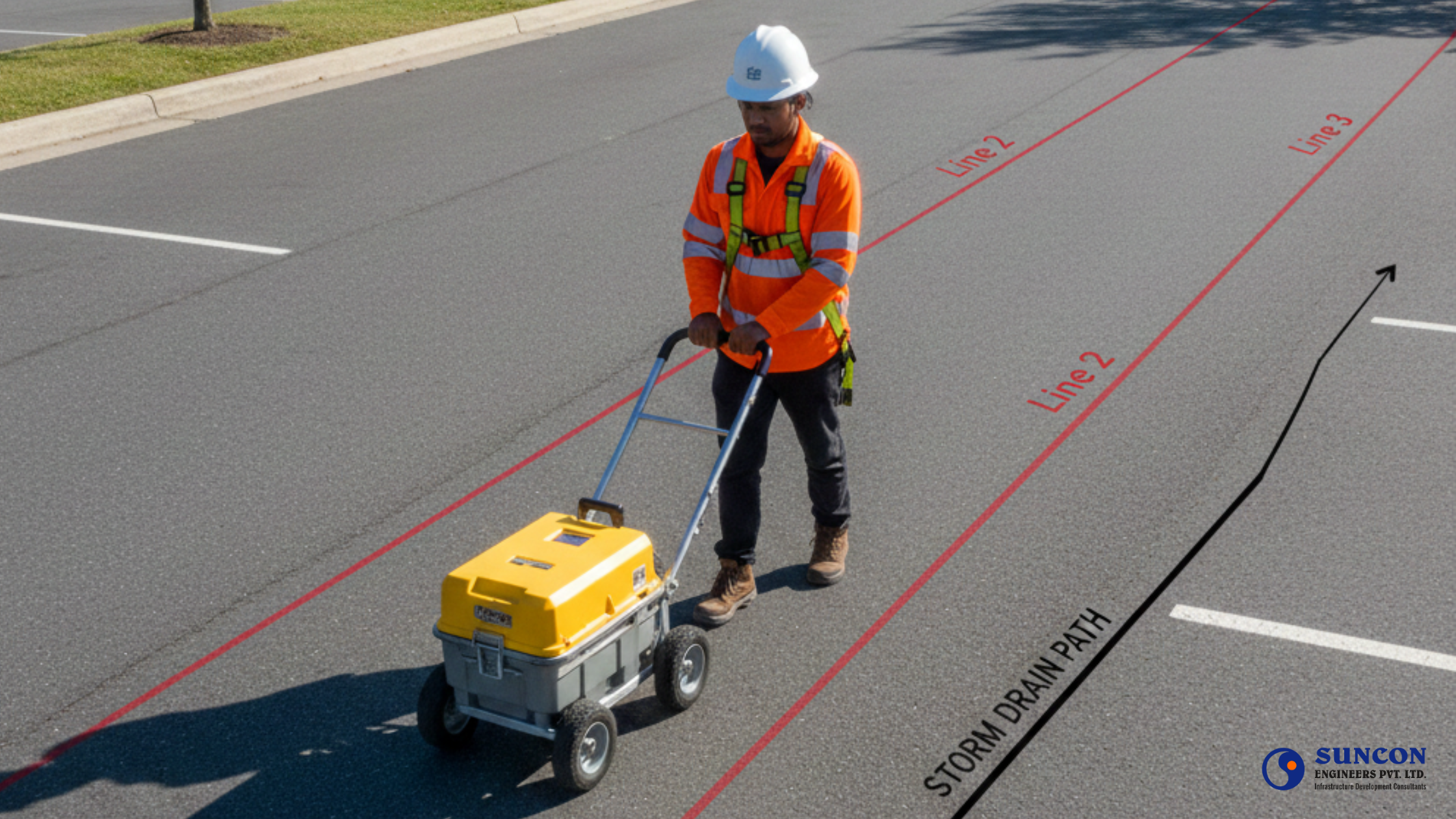
These utilities are usually buried under roads, buildings, and open grounds. Since they are not visible, construction teams need a reliable system to detect and map them before any excavation or drilling work begins. A Utility Detection Survey uses advanced tools like Ground Penetrating Radar (GPR), Electromagnetic Locators (EML), GPS, and surveying instruments to identify the exact position, depth, and alignment of underground utilities. Simply put, a Utility Detection Survey is like getting an underground X-ray before starting any construction activity. It helps everyone know what is hidden below the ground.
Why Is a Utility Detection Survey Conducted?
There are many strong reasons why companies, engineers, contractors, and government authorities conduct this survey. Below are the major purposes:
- To Prevent Damage to Underground Utilities: Accidentally hitting an underground electric cable, gas pipeline, or water line can cause serious accidents and financial losses. A utility survey helps avoid such damage and ensures safe excavation.
- To Ensure Construction Safety: Underground electric cables or gas pipelines can be dangerous if not detected. Utility detection ensures the site is safe for workers, machines, and the public.
- To Reduce Project Delays and Extra Costs: Hitting a pipeline or cable may stop work for days and increase project cost. Utility mapping helps avoid unexpected problems and keeps the project running smoothly.
- To Support Better Planning and Designing: Engineers can design foundations, drainage systems, and structures more accurately when they know the exact location of underground utilities.
- To Meet Government and Safety Regulations: Many projects require a utility detection survey as part of legal or environmental safety guidelines.
- To Identify Abandoned or Unknown Utilities: Older areas may have old pipelines or cables that are not shown in official records. Utility detection finds these hidden utilities and avoids surprises during construction.
How Is a Utility Detection Survey Performed?
A Utility Detection Survey uses smart technologies to detect underground objects. Some common methods include:
- Ground Penetrating Radar (GPR) Survey: GPR sends radio waves into the ground and detects reflections from underground objects. It gives a detailed image or map showing pipes, voids, and cables. It is one of the most accurate and widely used technologies.
- Electromagnetic Locating (EML): This method uses electromagnetic waves to detect metal objects like steel pipes, electrical cables, and communication lines.
- GPS and Total Station Survey: Once utilities are detected, GPS and Total Station instruments help create accurate maps and reports with coordinates and depth details.
- CCTV Inspection for Pipes: Camera inspection is used to check the condition and alignment of underground pipelines.
- Manual Verification (Trial Pit): In some cases, small test pits are dug to confirm the location of utilities detected by instruments.
Benefits of Conducting a Utility Detection Survey
A utility detection survey offers many important benefits for construction companies, contractors, engineers, and government bodies:
- Saves Time: By identifying utilities in advance, construction teams work faster with fewer interruptions.
- Saves Money: Avoids costly repairs, legal claims, and rework caused by utility damage.
- Improves Construction Accuracy: Engineers can plan better when they have an accurate underground map.
- Ensures Safety: Protects workers, citizens, and property by avoiding dangerous utility strikes.
- Supports Smart City Development: Utility mapping is a crucial part of urban development, planning, and infrastructure projects.
- Reduces Environmental Risks: Damaging a water line, sewer line, or oil pipeline can harm the environment. Utility surveys help avoid these risks.
- Helps Maintain Records: Utility detection provides updated digital maps that become valuable records for future projects.
Where Are Utility Detection Surveys Used?
Utility Detection Surveys are used in almost every construction-related field, including:
- Road construction
- Metro and railway projects
- Building construction
- Industrial plants
- Pipeline installation
- Telecom cable laying
- Smart city projects
- Airport development
- Housing societies
- Municipal projects
Why Utility Detection Survey Matters Today
Today’s world is full of complex underground networks. Every city has layers of cables and pipes running below the surface. Without proper detection, any construction activity becomes risky. That is why more companies are now focusing on underground utility mapping as a standard practice.
- Major accidents
- Power cuts
- Gas leaks
- Water supply interruption
- Internet and telecom failure
- Costly compensation claims
- Legal penalties
FAQ’s for Utility Detection Survey
- What is a Utility Detection Survey?
A Utility Detection Survey is a process used to locate and map underground utilities such as water pipelines, gas lines, electrical cables, telecom cables, and drainage lines before construction or excavation work begins.
- Why is Utility Detection Survey important in construction?
It prevents accidental damage to underground utilities, ensures worker safety, reduces project delays, and saves money by avoiding unexpected repairs.
- How does a Utility Detection Survey work?
The survey uses technologies like Ground Penetrating Radar (GPR), Electromagnetic Locators (EML), GPS, and Total Station instruments to detect and map underground utilities accurately.
- What are the benefits of utility detection?
It increases safety, avoids costly utility strikes, saves time, improves project planning, and ensures smooth construction with fewer interruptions.
- How deep can GPR detect underground utilities?
GPR can typically detect utilities up to 2–6 meters deep depending on soil type, material, and equipment frequency.