Stormwater drainage design is a critical aspect of urban and site planning aimed at controlling and managing rainfall runoff. Its primary goal is to prevent flooding, reduce property damage, and minimize environmental degradation. Properly designed drainage systems ensure that rainwater safely moves away from roads, homes, commercial buildings, and public spaces, using a combination of engineered structures, natural landscape features, and advanced hydrological planning.
What is Stormwater Drainage?
Stormwater drainage refers to the controlled collection, conveyance, and discharge of rainwater or melted snow from surfaces such as rooftops, roads, parking lots, and sidewalks. The system directs water away from populated areas and sensitive ecosystems, preventing hazards such as flooding, erosion, and water pollution. Depending on the scale, stormwater drainage can range from small residential gutters to large urban networks of pipes, channels, and detention basins.
Importance of Stormwater Drainage
Effective stormwater drainage is vital for:
- Flood Prevention: Directs excess rainfall away from streets, homes, and commercial areas.
- Infrastructure Protection: Prevents water damage to buildings, roads, and bridges.
- Erosion Control: Reduces soil loss by guiding fast-flowing water through controlled channels.
- Pollution Mitigation: Captures debris, sediment, and contaminants before they reach rivers, lakes, or groundwater.
- Environmental Sustainability: Supports groundwater recharge and reduces adverse impacts on natural waterways.
Components of Stormwater Drainage Systems
- Site-Level (Property) Drainage
Designed for individual properties, these systems manage water locally:
- Gutters and Downspouts: Collect roof water and redirect it to storm drains or infiltration areas.
- Swales: Shallow vegetated channels that slow runoff, promote infiltration, and remove pollutants.
- Rain Gardens: Planted depressions that capture runoff, filter pollutants, and enhance aesthetic appeal.
- Storage Tanks and Detention Basins: Temporarily hold water, releasing it slowly to prevent downstream flooding.
- Civil (Community-Level) Drainage
These systems serve neighborhoods, towns, and cities:
- Storm Drains (Catch Basins): Openings at street curbs or low points that capture surface water.
- Pipes and Culverts: Convey water underground, often beneath roads or railways.
- Channels and Open Ditches: Guide water across larger landscapes, sometimes integrating natural streams.
- Detention and Retention Ponds: Engineered basins that store water for controlled release, mitigating surges into rivers or lakes.
- Water Quality Improvement Devices: Screens, sediment traps, or biofiltration units that remove debris and pollutants.
How Stormwater Drainage Systems Work
- Runoff Generation: Rainfall or melted snow flows over impervious surfaces, picking up speed and potential contaminants.
- Collection: Property-level drains and gutters capture water and convey it into larger community drainage networks.
- Conveyance: Water travels through pipes, culverts, swales, and channels to prevent accumulation in vulnerable areas.
- Storage & Detention: Detention ponds or storage tanks temporarily hold water, releasing it gradually to avoid downstream flooding.
- Discharge & Treatment: Water is returned to natural waterways (rivers, lakes, or infiltration zones), often after filtration or sedimentation to improve quality.
Key Design Considerations
Engineers and planners consider several technical factors during stormwater drainage design:
- Hydrological Analysis: Determine rainfall intensity, runoff volume, and peak flow rates using local climate data and design storms.
- Topography & Site Layout: Identify low-lying areas, slopes, and natural drainage paths.
- Material Selection: Durable materials like reinforced concrete, HDPE, or PVC are chosen for longevity and corrosion resistance.
- Capacity & Safety Factors: Ensure system size accommodates extreme events with additional safety margins.
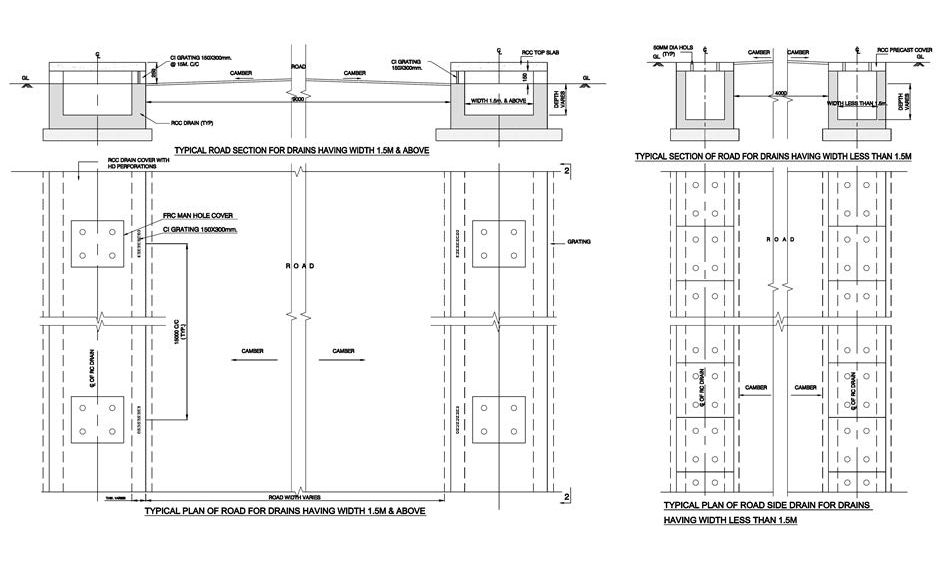
- Maintenance Access: Include manholes, inspection chambers, and cleanouts for routine maintenance.
- Environmental Compliance: Meet local regulations for stormwater quality, discharge limits, and erosion control.
A well-designed stormwater drainage system is essential for urban resilience. By combining hydrological analysis, structural engineering, and sustainable landscape design, these systems protect communities from flooding, safeguard infrastructure, and minimize environmental impact. From residential plots to large metropolitan areas, effective stormwater management ensures safety and enhances the quality of life.
At Suncon Engineers, we provide complete stormwater drainage design and survey services tailored for residential, commercial, and urban projects. Our expertise covers topographic surveys, hydrological analysis, hydraulic design, cost estimation, and system implementation. Whether it’s a small property or a large-scale city network, we ensure efficient runoff management, flood prevention, and long-term sustainability.
Our Projects:
- Preparation of Detailed Project Report (DPR) for Road Design and Storm Water Drainage at Panvel Corporation Area.
- Preparation of Detailed Project Report (DPR) for Improvement of Sanganoor Channel (Natural Drain), Formation of Foot Path along the Channel, and Storm Water Drainage at Coimbatore City Municipal Corporation.
- Consultancy services for survey, backfilling quantity, geotechnical investigation, retaining wall structure, and storm water drains at Pali, Dist. Raigad.
- Consultancy services for factory premises near Ambasamudram for roads and stormwater drains in Tamil Nadu.
- Storm Water Analysis and Design of Storm Water Drainage System in Talegaon Industrial Area.
Frequently Asked Question’s
Q 1: What happens if a stormwater drainage system fails?
A: Failures can lead to flooding, property damage, road washouts, erosion, pollution of natural water bodies, and disruption to transportation networks.
Q 2: Do I need a stormwater drainage system for my property?
A: Yes. Even small properties benefit from proper runoff management, reducing waterlogging and protecting landscaping.
Q 3: How often should drainage systems be maintained?
A: Inspect and clean drains at least twice a year, especially before and after the rainy season. Regular maintenance prevents blockages and prolongs system lifespan.