
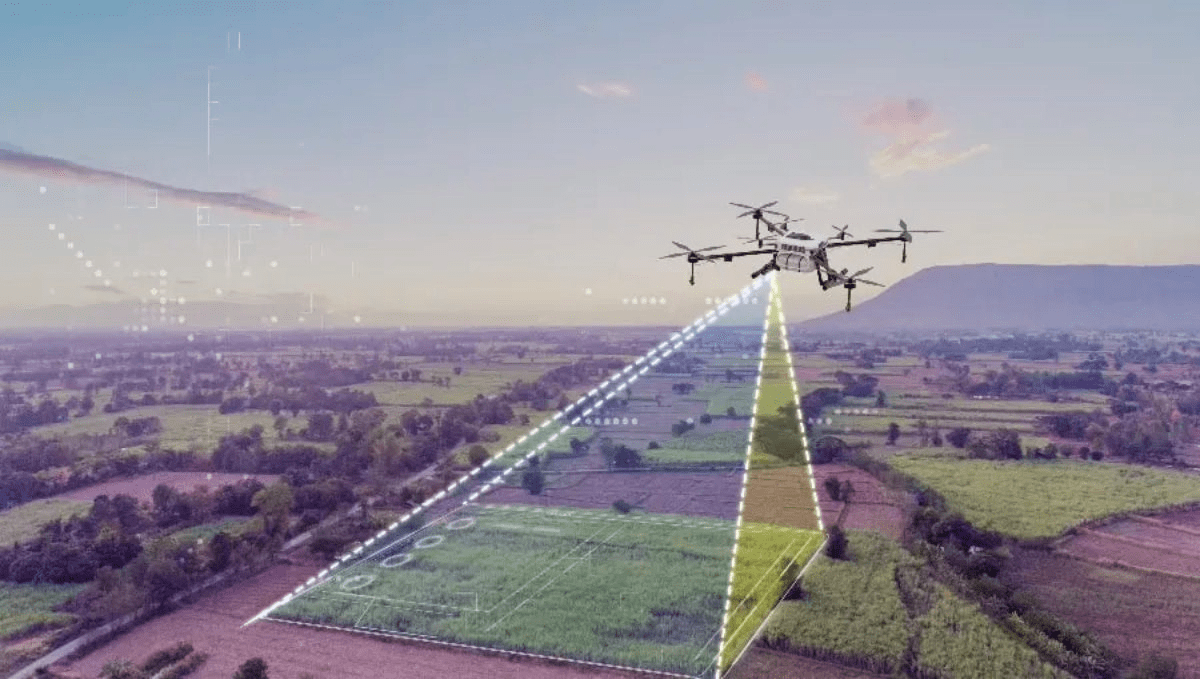
Surveying and geospatial engineering, photogrammetric survey stands out as one of the most advanced and efficient methods of capturing accurate spatial information. By using photographs taken from aerial or terrestrial platforms, this method extracts reliable measurements and generates 3D data models of the Earth’s surface.
From infrastructure projects and mining operations to urban planning and environmental monitoring, photogrammetry has become an indispensable tool for professionals who require detailed topographic and spatial analysis.
What Is a Photogrammetric Survey?
A photogrammetric survey is the science and technology of obtaining precise information about physical objects and the environment through the process of recording, measuring, and interpreting photographic images. It involves taking overlapping images usually from drones, aircraft, or satellites and processing them with specialized software to derive accurate 2D maps or 3D models of the terrain.
This survey method bridges photography with geometry. By analyzing multiple overlapping photos from different angles, advanced algorithms compute the exact position of each surface point, resulting in an accurate 3D reconstruction of the surveyed area.
The foundation of a photogrammetric survey lies in triangulation. When two or more photographs of the same area are taken from different positions, common points can be identified in each image. By using the geometric relationship between these camera positions and image points, 3D coordinates are calculated.
This principle is supported by the following technical components:
- Ground Control Points (GCPs): These are precisely marked locations on the ground with known coordinates. They act as reference points to georeference and scale the 3D model accurately.
- Overlap and Stereoscopic Vision: For reliable 3D modeling, at least 60–80% overlap between images is essential. This overlapping enables stereo vision similar to how human eyes perceive depth.
- Camera Calibration: Lens distortions and focal length variations are corrected during processing to ensure geometric accuracy.
- Aerial Triangulation: Mathematical adjustment (known as bundle adjustment) refines camera positions and orientations to produce a unified 3D block of data.
Technical Workflow of a Photogrammetric Survey
A typical photogrammetric survey involves several crucial stages:
- Planning
- Define the project scope, desired accuracy, and deliverables such as orthomosaic maps, digital terrain models (DTM), or 3D point clouds.
- Choose the platform: UAV photogrammetry, manned aircraft, or terrestrial imaging, depending on site size and accessibility.
- Identify GCP locations and plan flight paths ensuring consistent coverage and optimal lighting.
- Data Acquisition
High-resolution cameras mounted on drones or aircraft capture multiple overlapping images of the target area.
For drone surveying in India, parameters like flight altitude, overlap percentage, and camera angle are planned using mission software to maintain consistent Ground Sampling Distance (GSD).
- Image Processing
Captured images are imported into photogrammetry software such as Pix4D, Agisoft Metashape, or RealityCapture.
The software performs:
- Image alignment and tie-point generation
- Dense point cloud generation
- Creation of digital surface models (DSM) and digital terrain models (DTM)
- Production of orthophotos and 3D textured meshes
- Georeferencing
Using Ground Control Points and GPS data, all derived outputs are transformed into a defined coordinate system (e.g., WGS84 or UTM Zone). This ensures that the results align perfectly with GIS or CAD datasets.
- Quality Assurance
Accuracy checks are conducted using independent checkpoints. The Root Mean Square Error (RMSE) in x, y, and z coordinates determines the reliability of the model.
Deliverables from a Photogrammetric Survey
Depending on project requirements, the following outputs are typically generated:
- Orthomosaic map: Geo-referenced, distortion-free aerial imagery.
- Digital Surface Model (DSM): Represents the elevation of natural and built features.
- Digital Terrain Model (DTM): Shows bare-earth topography after removing vegetation and structures.
- 3D Point Cloud: Millions of spatial points representing the surveyed surface.
- Contour maps: Useful for topographic and engineering design.
- Volume reports: For volumetric stockpile measurement in mining and construction.
- 3D visualization models: For infrastructure planning and BIM integration.
Applications of Photogrammetric Survey
- Infrastructure Development: Photogrammetric data supports road, bridge, railway, and pipeline design. Accurate terrain mapping reduces design errors and enhances project planning for infrastructure mapping in India.
- Mining and Quarrying: Mining industries utilize photogrammetry for stockpile management, pit analysis, and volume estimation. Drone-based imaging reduces fieldwork risks while providing high accuracy.
- Urban Planning: Municipalities use photogrammetric data for 3D terrain modeling surveys, property mapping, and master planning. The generated orthophotos help update land records and monitor urban expansion.
- Agriculture and Forestry: High-resolution aerial images support crop monitoring, irrigation planning, and forest canopy assessments, making it vital for precision agriculture.
- Environmental Monitoring: Photogrammetry assists in flood modeling, erosion tracking, and disaster management, offering precise pre- and post-event comparisons.
- Archaeology and Cultural Heritage: Researchers use close-range photogrammetry to document monuments and artifacts with sub-millimeter precision, preserving cultural heritage in digital form.
Advantages of Photogrammetric Survey
- High Accuracy: When combined with GCPs, positional accuracy can reach centimeter-level precision.
- Rapid Data Collection: Large areas can be surveyed quickly with minimal manpower.
- Cost-Effective: Reduces field time, especially when compared to ground-based total station surveys.
- Versatility: One dataset can generate multiple outputs such as orthomosaics, contour maps, and DTMs.
- Safety: Ideal for hazardous or inaccessible areas.
- Integration with GIS and CAD: Enables seamless transition to design, modeling, and analysis platforms.
Future of Photogrammetry in India
The rise of UAV photogrammetry and government initiatives like Digital India and Smart Cities Mission have boosted the adoption of geospatial technologies.
Indian survey companies are integrating drone-based mapping with AI-driven data analytics to improve precision and reduce turnaround times.
As industries shift toward digital twins and real-time 3D visualization, Photogrammetric Survey will continue to play a major role in infrastructure planning and spatial decision-making.
How to get a Accurate Results
- Use RTK/PPK drones for high-accuracy GPS positioning.
- Maintain 70–80% image overlap for reliable stereo reconstruction.
- Capture imagery under uniform lighting to minimize shadow distortion.
- Use calibrated cameras with consistent exposure settings.
- Validate outputs using independent ground checkpoints.
- Choose the right projection and coordinate system before data export.
Photogrammetric surveying has transformed the way professionals capture, process, and interpret spatial data. By combining high-resolution imaging with advanced processing algorithms, it delivers accurate topographic and 3D information in a fraction of the time traditional methods require.
Whether used for drone surveying in India, urban development, mining operations, or digital terrain modeling, photogrammetry remains an essential tool in the modern geospatial toolkit.
Its ability to produce detailed, measurable, and geo-referenced outputs not only enhances project efficiency but also supports better decision-making across industries. As technology evolves, the precision and potential of Photogrammetric Survey will continue to expand bridging the gap between the physical world and its digital representation.