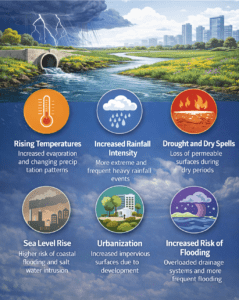
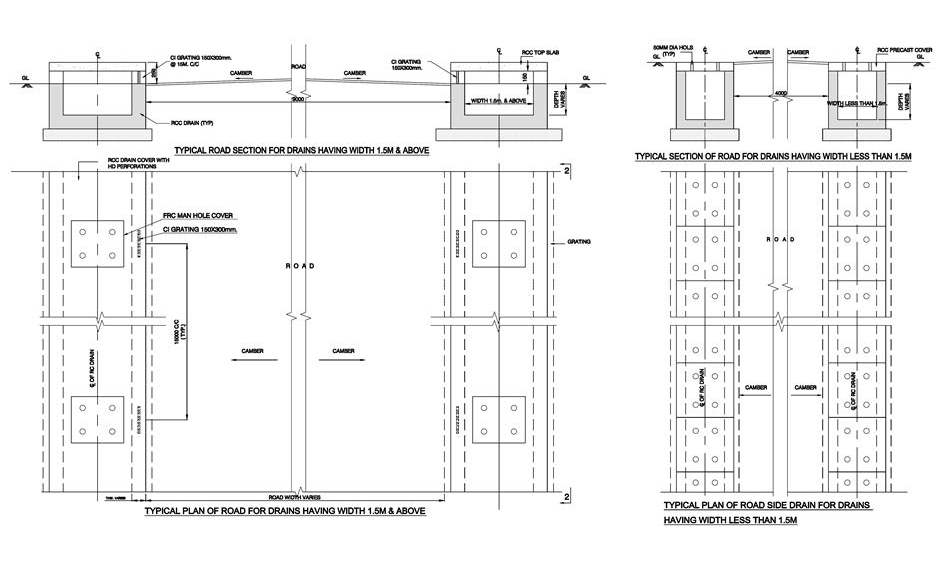
Urban areas face increasing flood risks due to rapid development, impervious surfaces, climate change, and inadequate stormwater infrastructure. One effective strategy in mitigating these risks is lake flow management within urban stormwater projects. By properly managing inflows, outflows, storage, and ecological health of lakes (both natural and constructed), cities can minimize flood point issues, i.e., points of flooding, inundation, overflow, or drainage failure.
Essential Terms in Urban Stormwater and Lake Flow Regulation:
- Urban stormwater management
- Lake flow control / lake flow regulation
- Detention ponds, retention ponds, constructed lakes/wetlands
- Flood mitigation / flood point / flood point issues
- Peak flow attenuation
- Inflow and outflow structures (sluice gates, spillways)
- Stormwater harvesting
- Non-point source pollution
- Real-time control / feedback control in stormwater systems
- Sponge city / green infrastructure
Using these terms improves findability for readers seeking solutions related to urban flooding and lake-based stormwater control.
Why Lake Flow Management Matters for Urban Flood Mitigation
- Peak flow regulation: Lakes act like natural buffers. During heavy rain, they can store or slow down excess stormwater, reducing the peak discharge downstream.
- Volume control: By capturing, storing, infiltrating, or gradually releasing stormwater, lakes reduce the overall volume that causes flash floods.
- Pollution control: Runoff often contains sediments, nutrients (nitrogen, phosphorus), heavy metals, hydrocarbons, etc. Lakes (especially with proper design) allow sedimentation, biological uptake, and filtration.
- Ecosystem health and urban resilience: Managed lakes contribute to biodiversity, recreational spaces, cooling effects, groundwater recharge, etc.
- Adaptation to climate change: With increased intensity and frequency of rainfall, cities need flexible infrastructure. Lakes with regulated outflows, spillways, and buffer zones help adapt to variable hydrological loads.
Techniques and Design Elements for Effective Lake Flow Management
Here are proven practices and design elements often used in successful projects:
|
Challenges & Common Issues
While lake flow management has strong potential, there are obstacles and risk points to watch out for:
- Encroachment & Land Use Change: Urban development often eats into buffer zones, wetlands, or flood plains, reducing storage capacity.
- Impervious Surfaces: Road, pavement, buildings increase runoff, reduce infiltration; more load to the lake system.
- Clogging of Inlet/Outlet Structures: Solid waste, silt, weeds block flow, reducing capacity; regular maintenance needed.
- Aging / Undersized Infrastructure: Many lakes/lake-structures weren’t designed for current rainfall intensities or population. Failure to redesign or upgrade leads to flood points.
- Poor Water Quality: If lakes are polluted, using them as retention/harvesting sources becomes risky; nutrients/lakes may eutrophy, invasives may take over.
- Lack of Monitoring or Control Systems: Without real-time monitoring or predictive release mechanisms, lakes may overflow unexpectedly.
- Governance, Policy & Funding: Institutional coordination, regulatory frameworks, budgets are often lacking or inconsistent.
Implementation Steps for Urban Lake Flow Management Projects
- Assessment & Data Collection
- Gather rainfall intensity-duration-frequency (IDF) curves.
- Map catchment, impervious areas, existing flow paths.
- Inventory existing lakes/wetlands, their capacity, structure, inflow/outflow features.
- Hydrological / Hydraulic Modelling
- Use software to simulate flood events, lake levels, outflow scenarios.
- Determine worst-case events (e.g. 10-, 25-, or 100-year storms).
- Design of Flow Control Structures
- Size inflows, spillways, sluice gates.
- Include provision for overflow safely.
- Incorporate Storage / Retention
- Detention/retention zones, wetland buffers.
- Consider dual use (recreation, habitat).
- Optimize for Water Quality
- Sediment traps, nutrient management, pollution prevention upstream.
- Real-time Control & Monitoring
- Sensors, gates/valves, control systems tied to forecast.
- Maintenance & Operations Plan
- Cleaning inlets/outlets, vegetation management, dredging if needed.
- Governance, Policy and Community Engagement
- Clear institutions, funding, regulatory oversight.
- Public awareness and stakeholder participation.
FAQ’s
Here are frequently asked questions people search regarding lake flow management in urban stormwater/flood mitigation.
- What is the difference between detention and retention lakes/ponds, and which is better for flood mitigation?
- Detention facilities temporarily hold stormwater during heavy rainfall and release it gradually, minimizing downstream flooding. They usually dry out or have minimal water outside storms.
- Retention facilities maintain a permanent pool of water; they not only aid flood control but also improve water quality, ecology, and often aesthetics.
- For flood mitigation, detention is more directly focused on peak flow control. Retention adds value for water quality, habitat, and urban amenity. Optimal design often uses both in combination.
- How does real-time flow control improve lake performance?
- Real-time control involves sensors, gates / valves, and models or weather forecasts to dynamically adjust inflow/outflow.
- It allows pre-emptive lowering of lake levels before predicted storms to create storage buffer, or delaying outflows to avoid downstream overload.
- Studies show that this can significantly reduce peak flows compared to static systems.
- What design parameters are critical when sizing inflow/outflow structures?
- Rainfall intensity & duration (return periods), catchment area, runoff coefficient (how much is impervious).
- The desired maximum lake level (freeboard), safety factor for extreme events.
- Outflow capacity: both under normal and storm conditions.
- Maintenance access, clogging risk, sedimentation.
- How can urban lakes be used for stormwater harvesting while still preventing flood risk?
- Design dual-purpose usage: retain water for non-potable reuse (irrigation, industrial) while keeping buffer storage for storms.
- Maintain an operating schedule for releasing or using stored water when safe.
- Ensure water quality is suitably treated, manage inlet pollution.
- What are the cost and governance considerations for implementing lake flow management?
- Upfront capital costs: land acquisition, structural works, real-time control systems, landscaping.
- Ongoing operational / maintenance costs: cleaning, vegetation, monitoring, dredging.
- Institutional responsibilities: which agency handles lakes, stormwater drains, flood control; coordination among departments.
- Policies and regulations for land use, encroachment, buffer zones, water quality standards.
- Community engagement ensures sustained use, preventing dumping, illegal discharges, etc.
Lake flow management is a powerful tool in urban stormwater projects for mitigating flood point issues. When designed carefully combining storage, controlled flows, real-time adaptation, pollution control, and community governance lakes and related water bodies can reduce peak floods, improve safety, and enhance ecological and social benefits.
Suncon Engineers provides end-to-end solutions for stormwater projects, helping cities effectively mitigate flood point issues. With expertise in hydrological modelling, drainage design, and lake rehabilitation, the firm designs and implements sustainable systems that regulate inflow and outflow, enhance flood resilience, and promote water conservation. Through advanced simulation tools, field surveys, and engineering innovation, Suncon Engineers ensures every project delivers long-term performance, environmental balance, and improved urban flood safety.