
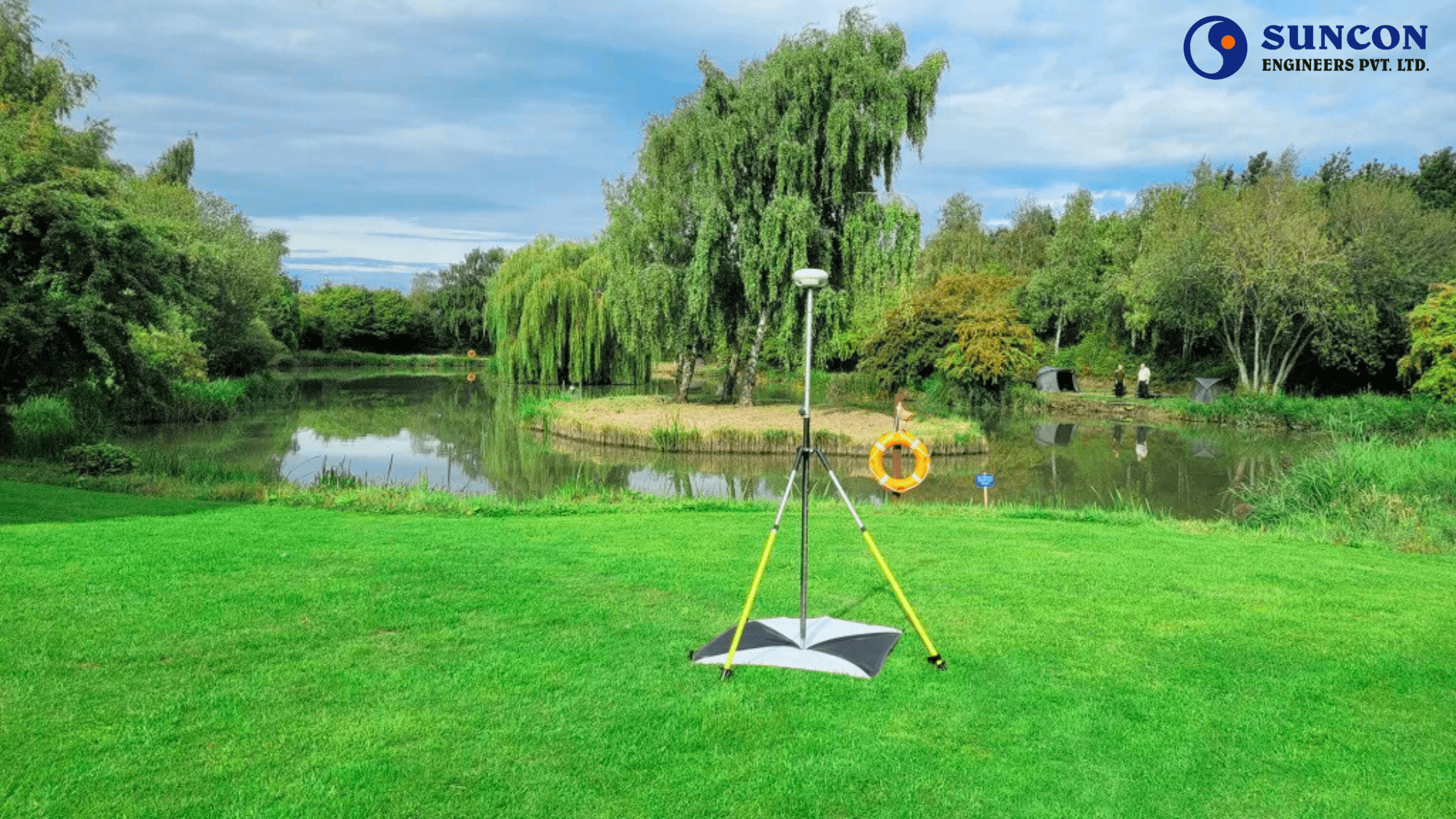
Surveying is the backbone of modern engineering, construction, and infrastructure development. From roads and bridges to buildings and utilities, every project relies on precise measurements to ensure accuracy and safety. One of the most critical components that enable this precision is the control point survey. These reference points act as the framework for all other survey activities, providing consistency, accuracy, and repeatability across different stages of a project.
Control Point Definition in Surveying
A control point definition in surveying refers to a fixed, physical, and well-documented position on the ground that serves as a reference for spatial measurements. These points can be established using traditional ground surveying methods or advanced technologies such as GPS, GNSS, and total stations. They are usually marked with permanent materials like concrete pillars, metal stakes, nails, or benchmarks to ensure longevity and reliability. This permanent establishment is also referred to as survey monumentation, which ensures that the control points remain stable and accessible over the course of a project or even decades later.
What is a Control Point in Surveying?
It’s a reference location with known coordinates (horizontal, vertical, or both) used as the basis for further survey work. These points act like anchors in the field, ensuring that every measurement taken ties back to a common, consistent framework.
During the design and construction of a highway, engineers need to measure long stretches of land. By referencing control points at specific intervals, all measurements remain consistent regardless of where or when they are taken.
What are Control Points in Surveying?
Now, you might wonder, what are control points in surveying in a practical sense. Control points are categorized into two main types:
- Horizontal Control Points – These points define the position of objects on the Earth’s surface using latitude and longitude (or coordinates in a local grid system). They are essential for mapping, boundary marking, and geospatial studies.
- Vertical Control Points – These points provide elevation data above a fixed datum, such as mean sea level. They are critical for projects that involve height differences, such as road gradients, dam construction, and drainage planning.
Importance of Control Points in Surveying
It is the backbone of any survey project, without them measurements would lack consistency, leading to errors in design and costly mistakes in construction. Key reasons why control points are important include:
- Accuracy: They provide reliable reference data that ensures all survey measurements align properly.
- Consistency: Control points maintain uniformity across different survey stages, even if conducted months or years apart.
- Coordination: Multiple survey teams can work on the same project using the same reference system, reducing discrepancies.
- Efficiency: With predefined control points, surveyors can quickly set up their equipment and start measurements, saving time.
- Verification: Control points help validate construction work, ensuring it matches design specifications.
What are the Control Points in Surveying?
They can be permanent monuments, benchmarks, GPS-based coordinates, or temporary site-specific markers. For example:
- Concrete pillars installed at strategic project locations.
- Brass or aluminium markers embedded into pavements or rocks.
- Survey nails or pegs driven into the ground for short-term use.
- GPS receivers storing geodetic coordinates.
How to Set Up Survey Control Points
Understanding how to set up survey control points is essential for professional surveyors. The process involves a mix of planning, fieldwork, and documentation:
- Planning and Reconnaissance
- Study project requirements and maps to determine suitable locations for control points.
- Choose stable, accessible, and visible spots that won’t be disturbed during construction.
- Establishing the Control Points
- Use GPS, GNSS, or total station instruments to calculate accurate positions.
- Mark the points permanently using concrete pillars, stakes, or embedded metal discs.
- For vertical control, establish benchmarks with known elevation values.
- Survey Traverse
- A common method to establish control is by performing a survey traverse, where surveyors measure distances and angles between points in sequence, creating a connected network.
- Traverses may be open (for short surveys) or closed (for higher precision).
- Verification and Adjustment
- Cross-check positions with existing national or regional geodetic control networks.
- Adjust any discrepancies through calculations and re-measurements.
- Documentation
- Record coordinates, elevations, and descriptions of each control point.
- Create sketches or digital maps showing their locations.
- Maintain logs for future reference and auditing.
- Maintenance
- Inspect points regularly during the project to ensure they remain undisturbed.
- Re-establish points immediately if damaged or destroyed.
Technical Aspects of Control Point Surveys
Establishing and using control points involves several technical considerations:
- Instrumentation: Modern surveyors use GNSS receivers, total stations, and laser scanners to determine coordinates with sub-centimeter accuracy.
- Datum and Projection Systems: Control points must be tied to a recognized datum (like WGS84 or local state grids) to ensure consistency across maps and datasets.
- Triangulation in Surveying: Control networks can also be established by measuring angles between inter-visible stations, creating triangles that can be solved for position.
- Trilateration in Surveying: Alternatively, distances between multiple stations can be measured and used to determine precise positions.
- Error Adjustment: Survey networks undergo mathematical adjustments, such as least squares, to minimize errors and distribute them evenly across the system.
- Redundancy: Multiple points are established to ensure backup in case one is lost or inaccessible.
- Geospatial Control Points: These points are increasingly integrated with GIS databases for long-term geospatial analysis.
- Survey Control Network Design: Proper planning of the density and layout of control points ensures that the network is both efficient and reliable.
Applications of Control Point Surveys
Control point surveys have wide-ranging applications across industries:
- Construction: Setting out foundations, roads, pipelines, and utilities through engineering survey control.
- Transportation Projects: Ensuring alignment in railways, highways, and airports.
- Urban Planning: Accurate mapping for land use, zoning, and utilities.
- Mining and Exploration: Establishing baselines for volumetric calculations.
- Hydrology and Marine Projects: Controlling water levels, embankments, and coastal structures.
- Boundary Survey Control: Determining and preserving legal property boundaries.
- Land Survey Control Points: Establishing base references for cadastral mapping and land ownership documentation.
- Infrastructure Monitoring: Detecting shifts, settlements, or deformations in large structures.
Challenges in Control Point Surveys
While control points are indispensable, surveyors often face challenges:
- Environmental factors like floods, landslides, or heavy traffic disturbing markers.
- Tampering or accidental damage by locals or construction crews.
- Errors in instrument calibration or data processing.
- Inaccessible terrains, especially in hilly, forested, or underwater projects.
Control point surveys form the foundation of accurate and reliable surveying practices. You should clearly understand what a control point in surveying is, what are control points in surveying, and why they are indispensable for engineering and infrastructure projects. Their role in ensuring precision, consistency, and efficiency makes them the silent backbone of construction and mapping industries.