Aerial drone survey is a modern method of collecting land data using drones, also known as unmanned aerial vehicles (UAVs). These drones are equipped with high-resolution cameras or sensors and are flown over an area to capture detailed images and information from above. The collected data is then processed using computer software to create accurate maps, 3D models, and elevation details of the land. This method is faster, safer, and more cost-effective than traditional ground surveying methods and is now widely used across industries such as construction, agriculture, mining, and urban planning.
One of the biggest benefits of drone surveys is speed. Drones can cover large areas in a short time, making them ideal for projects with tight deadlines. They’re also much more affordable since they reduce the need for large teams and heavy equipment. Despite being quick and budget-friendly, drone surveys offer high levels of accuracy, especially when modern GPS systems like RTK or PPK are used. Another major advantage is safety drones can fly over dangerous or difficult terrain, removing the need for humans to enter risky areas such as cliffs, mines, or disaster zones. In addition, drone mapping allows for real-time data collection and instant insights, which is incredibly useful in fast-paced environments like construction sites or emergency response situations. They can also access remote areas where traditional equipment would struggle to reach.
There are different types of drone surveys, depending on the kind of data needed. The most common is photogrammetry, where drones take overlapping photos and software pieces them together to form 2D and 3D maps. For areas with thick forests or rough landscapes, LiDAR drones are used. They send out laser pulses to map the ground even through vegetation. In industries like solar energy and construction, thermal drones detect heat to identify issues like electrical faults or insulation problems. For farming, multispectral drones help analyze crop health by capturing light patterns invisible to the human eye.
The process of drone surveying follows a few simple steps: First comes planning, this involves defining the survey area, choosing the right type of drone and sensor, and creating a flight log using mapping software. Sometimes, surveyors also place ground control points (GCPs) with known GPS coordinates to improve the accuracy of the final map. Once everything is ready, the drone is flown over the area to capture images or sensor data. After the flight, the collected data is uploaded into processing software like Pix4D, Drone Deploy, or Agi soft Meta shape, where it is converted into maps, 3D models, or elevation profiles. Finally, the outputs are analyzed and used for planning, inspection, reporting, or further action.
Drone mapping is used in many fields. In construction, it helps survey land, monitor site progress, and calculate material volumes. In mining, drone surveys are used to measure stockpiles, plan blasts, and monitor the development of the mine. In agriculture, drones help farmers check crop health, plan irrigation, and spot issues early. Urban planners use drone maps to analyze land use and plan infrastructure. During disasters, drones help assess damage and support rescue operations. Environmental experts use drones to monitor forests, wetlands, and coastlines. In the energy sector, drone inspections are used for power lines, solar farms, and wind turbines.
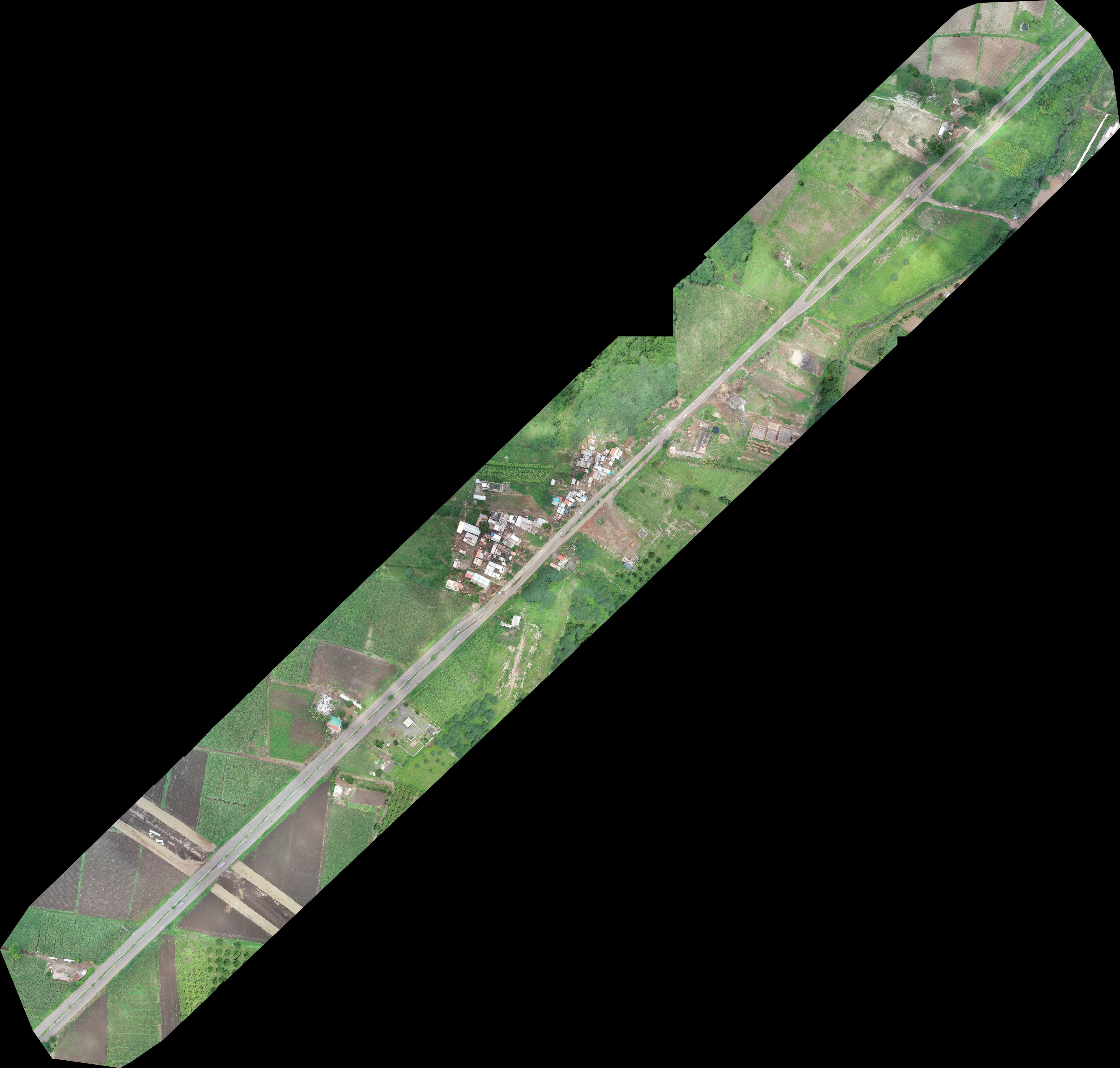
Drone surveys provide a variety of useful outputs: One common result is an orthomosaic map a high-resolution image made by stitching together many aerial photos. These maps are often more detailed than satellite images. Drones can also produce 3D models of buildings or landscapes, which are helpful for planning and analysis. Digital Surface Models (DSM) include buildings and trees, while Digital Terrain Models (DTM) show only the bare ground. Point clouds made from millions of 3D data points offer even more detail and accuracy. Other outputs include contour maps, which show elevation levels across a site, and volume measurements, which help track how much material has been added or removed from a site. Thermal maps show areas of heat or cold, and vegetation maps help farmers understand plant health using color-coded visuals.
Aerial drone survey and mapping is a powerful tool that brings speed, safety, and precision to a wide range of industries. Whether you’re building infrastructure, managing a mine, growing crops, or responding to a natural disaster, drones can help you gather the data you need quickly and accurately. As the technology continues to improve, more people and businesses are turning to drones for smarter decision-making and better results. If you’re looking for a way to improve how you collect land and structure data, drone mapping might be the perfect solution.
We offer professional aerial drone survey and mapping services using the latest drone technology, including DJI Matrice 300 RTK, DJI Phantom 4 RTK, and DJI Mavic 3 Enterprise, which deliver high-precision data for a wide range of applications. Our drones are equipped with RTK/PPK GPS systems, high-resolution cameras, and LiDAR sensors for advanced surveying, 3D modelling, and topographic mapping. We provide our services across India, including major cities and industrial zones in Maharashtra, Gujarat, Karnataka, Tamil Nadu, Telangana, and Delhi NCR, as well as remote and rural regions. Whether your project is in construction, mining, agriculture, energy, or urban planning, we ensure fast, safe, and accurate aerial data solutions tailored to your needs.
Our Projects:
Aerial Drone Survey at Kasarde
➢ Verify and correctness of existing DGPS mapped GCP’s and Lease Boundary Coordinates.
➢ High Resolution Orthomosaic image of Lease area including 100m Buffer zone and
also stockpiles area mapping which is outside the lease area.
➢ Digital Elevation Model DEM/DTM/DSM.
➢ AutoCAD DWG files with all the Vector data with contour details / mapping showing existing mining area and stockpiles in the surrounding area.
➢ All other data as per IBM requirement.
➢ All the captured data to be given in soft and hard form.