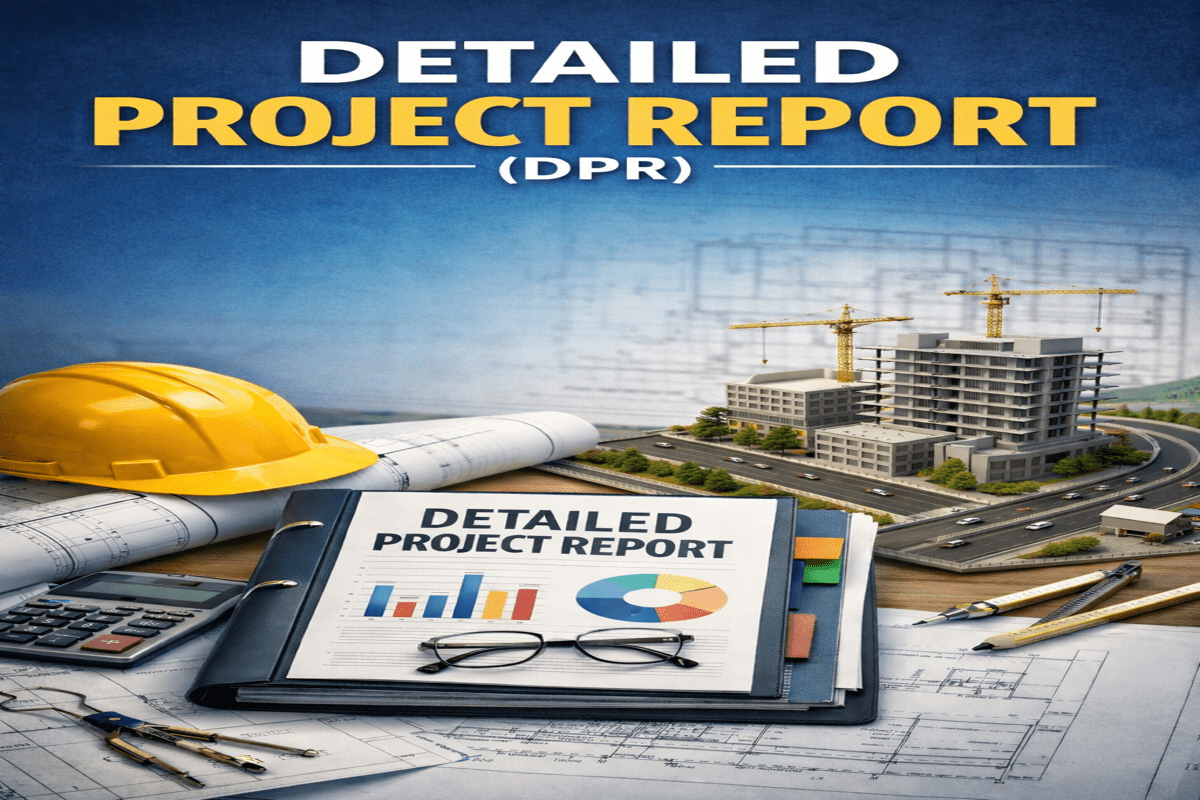
A competitive business environment, proper planning is the key to success for any project. Whether you are starting a new business, applying for a bank loan, or launching an infrastructure initiative, having a well-prepared detailed project report (DPR) is extremely important. A project report acts as a blueprint for your entire project. It explains the idea, objectives, financial planning, resources, and expected results of the project. Without a proper detailed project plan, it becomes difficult to attract investors, get funding, or execute the project efficiently.
What is a Detailed Project Report (DPR)?
A Detailed Project Report (DPR) is a comprehensive document that provides complete information about a project before it is implemented. It includes technical, financial, operational, and market-related details.
In simple terms, a project report explains:
- What the project is about
- Why the project is needed
- How the project will be executed?
- What resources are required
- What financial investment is necessary?
- What outcomes are expected
A well-prepared detailed project plan helps stakeholders understand the feasibility and profitability of the project.
Importance of a Detailed Project Report
A detailed project report plays a crucial role in the success of any project. It helps entrepreneurs, companies, and investors make informed decisions.
- Proper Project Planning: A detailed project plan provides a clear roadmap for the project. It defines every step involved in implementation and reduces the chances of errors.
- Helps in Getting Bank Loans: Financial institutions and banks often require a detailed project report before approving loans. The report shows the viability and profitability of the project.
- Attracts Investors: Investors want to understand the potential returns before investing money. A professional project report increases investor confidence.
- Risk Analysis: A detailed project report identifies possible risks and challenges that may arise during project execution. This allows project managers to prepare solutions in advance.
- Better Resource Management: A well-prepared detailed project plan ensures that resources like manpower, materials, and finances are used efficiently.
Key Components of a Detailed Project Report
A professional detailed project report includes technical planning and execution details for different types of infrastructure projects. A strong detail project plan helps engineers, contractors, and authorities understand the scope and implementation process of the project.
- Storm Water Drainage Project: A storm water drainage project focuses on managing rainwater and preventing flooding in urban or rural areas. The detailed project report for storm water drainage includes drainage network planning, pipe sizes, channel design, catchment analysis, and water flow calculations. A proper detail project plan ensures that rainwater is safely diverted through drains, preventing waterlogging and infrastructure damage.
- Sewerage System Project: A sewerage project involves designing and constructing systems for wastewater collection and treatment. The project report includes sewer network layouts, pumping stations, treatment plants, and pipeline design. A well-prepared detailed project report ensures efficient wastewater management and protects public health and the environment.
- Water Supply Project: A water supply project aims to provide clean and reliable drinking water to residential, commercial, and industrial areas. The detailed project report includes water source identification, pipeline networks, storage reservoirs, pumping systems, and treatment facilities. A proper detail project plan ensures sustainable water distribution and efficient management of water resources.
- Road Construction Project: A road construction project requires a comprehensive project report that includes route alignment, pavement design, traffic analysis, drainage planning, and construction materials. The detailed project report also explains road width, design standards, and cost estimation to ensure safe and durable road infrastructure.
- Bridge Construction Project: A bridge project involves detailed engineering planning for crossing rivers, valleys, or highways. The project report includes structural design, load calculations, foundation design, and construction methods. A strong detail project plan ensures that the bridge is structurally safe, durable, and capable of handling expected traffic loads.
- Underpass Project: An underpass project is designed to allow traffic or pedestrians to pass under roads or railway lines. The detailed project report includes excavation planning, structural design, drainage systems, and traffic management during construction. A well-prepared project report ensures that the underpass improves traffic flow and reduces congestion.
- Flyover Project: A flyover project is developed to reduce traffic congestion in busy urban areas. The detailed project report includes structural design, traffic studies, foundation details, and construction methodology. A proper detail project plan ensures smooth traffic movement and improves transportation efficiency.
- Building Construction Project: A building construction project includes residential, commercial, or industrial structures. The project report includes architectural plans, structural design, material specifications, safety standards, and cost estimation. A professional detailed project report helps ensure that the building project is completed safely, efficiently, and within budget.
Frequently Asked Questions (FAQs) About Detailed Project Report (DPR)
1. How to make a Detailed Project Report?
To make a detailed project report, first define the project idea and objectives. Then conduct market research, prepare a detail project plan, estimate project costs, and include financial analysis and risk assessment. A clear project report should explain how the project will be executed step by step.
2 .What is a Detailed Project Report in Civil Engineering?
In civil engineering, a detailed project report (DPR) is a document that provides technical, financial, and planning details of a construction project. It includes design plans, cost estimates, materials, construction methods, and a complete detail project plan for the project.
3. What is DPR (Detailed Project Report)?
A DPR (Detailed Project Report) is a comprehensive project report that explains the feasibility, planning, and financial aspects of a project before implementation. It helps businesses, investors, and banks understand the scope and viability of the project.
4. How to prepare a Detailed Project Report?
To prepare a detailed project report, start with a project overview, conduct market analysis, prepare a detail project plan, estimate the project cost, and add financial projections. The project report should clearly explain how the project will be executed and managed.
5. What is a Detailed Project Report?
A detailed project report is a structured document that outlines the complete plan of a project, including objectives, market research, technical details, financial planning, and implementation strategy. It serves as a roadmap for successful project execution.